Mortise and tenon joinery is widely used in furniture, cabinetry, doors, windows, and timber framing. Understanding its cost requires examining materials, labor, tooling, project scale, and quality expectations. This guide explains how mortise and tenon costs are formed, how to compare pricing models, and how to evaluate overall value for different applications.
Overview of Mortise and Tenon Joinery and Cost Drivers
Mortise and tenon is a mechanical joint where a projecting tenon fits into a corresponding mortise. It can be cut by hand, with stationary machines, or with CNC systems. Costs are influenced by joint complexity, woodworking precision requirements, and project volume.
Cost drivers include:
- Material type and dimensions (hardwood vs softwood, section size, length)
- Method of production (hand-cut, machine-cut, CNC, or hybrid workflows)
- Required tolerances, fit quality, and structural performance
- Finishing requirements and integration with the overall product
These drivers translate into labor time, tooling wear, setup overhead, and quality control effort, all of which must be reflected in the final price.
Common Pricing Models for Mortise and Tenon Work
Different shops and fabricators use different methods to price mortise and tenon work. Understanding these models helps in comparing quotes and budgeting accurately.
Per Joint or Per Connection Pricing
Per-joint pricing is frequently used in furniture and small-batch components. Each mortise and tenon pair is treated as a discrete billable unit. Pricing often distinguishes between simple and complex joints.
Typical structure:
- Base price per simple through or blind mortise and tenon
- Additional charge for haunched, wedged, or draw-bored joints
- Surcharges for oversized sections, hard species, or angled cuts
Hourly Labor Plus Materials
In custom work and restoration, shops may charge an hourly rate plus materials because each joint can involve different constraints. This model is common when existing structures or irregular stock require bespoke solutions, or where on-site work is necessary.
Per Project or Per Assembly Pricing
For complete items such as chairs, tables, doors, frames, or trusses, joinery is included in a package price. In this case, mortise and tenon work is part of an integrated quote that also accounts for design, milling, assembly, and finishing.
Project-based pricing is especially prevalent in timber framing, where hundreds of joints are planned and costed together in a detailed takeoff.
Key Factors Influencing Mortise and Tenon Cost
Mortise and tenon costs scale nonlinearly with complexity and precision requirements. The following factors are decisive for both budget estimation and quote evaluation.
Material Species and Dimensions
Wood species and section sizes have a direct impact on time, tooling, and waste. Dense or abrasive species (such as hard maple, white oak, and some tropical hardwoods) increase wear on cutting tools and generally require slower feed rates, raising labor cost.
Larger cross sections require deeper mortises and longer tenons, which can involve multiple passes and specialized tooling. Thin or narrow parts, by contrast, may need more care in clamping and support to avoid damage, which also affects labor time.
Joint Geometry and Complexity
Mortise and tenon geometry ranges from basic rectangular joints to intricate forms with multiple shoulders and mechanical locking elements. Geometry determines cutting steps, setup counts, and inspection effort.
Complexity factors include:
- Standard vs haunched or housed tenons
- Straight vs angled or compound-angled joints
- Single vs multiple tenons on a single member
- Presence of pegs, wedges, or draw-boring
Each geometric feature adds operations, increasing cumulative cost over many joints.
Joint Tolerances and Fit Quality
Requirements for tightness, repeatability, and structural performance strongly influence cost. A loose-fitting joint for non-structural trim can be cut quickly, whereas a high-precision joint for load-bearing or visible fine furniture requires additional measuring, test fitting, and adjustment.
Micrometer-level tolerance is rarely needed, but consistent tight mechanical fit across a full batch may require jigs, fixtures, and careful calibration of machines, raising setup and verification costs even if per-joint cutting time remains low.
Production Method and Equipment
The method used to create mortises and tenons directly affects labor and overhead. Hand tools, stationary machinery, and CNC equipment each have characteristic cost profiles.
Manual methods involve lower capital expenditure but higher skilled labor input per joint. CNC methods involve high upfront programming and setup but low incremental cost per joint, particularly for repeated work. Hybrid workflows often combine machine roughing with hand tuning to balance cost and quality.
Finish Requirements and Surface Preparation
Although mortise and tenon surfaces are largely hidden, finish requirements for surrounding faces influence the workflow. Clean shoulders, accurate arrises, and pre-finished components can add steps that indirectly affect joinery cost by complicating clamping and staging sequences.
Batch Size and Repetition
Batch size is a major economic factor. Repeating the same joint many times enables efficient use of jigs and production tooling, amortizing setup across the batch. In contrast, unique or low-volume joints often cost more per unit because similar setup effort must be spread over fewer parts.
Labor Components in Mortise and Tenon Pricing
Labor is typically the largest component of mortise and tenon cost, especially in custom work. Understanding how tasks are segmented helps in evaluating estimates and identifying cost reduction options.
Layout and Marking
Layout involves marking mortises and tenons on the workpieces, typically from reference faces. Accurate layout ensures consistent shoulder lines and alignment across assemblies. More complex assemblies require detailed layout, often with reference to full-size drawings or templates.
Cutting Mortises
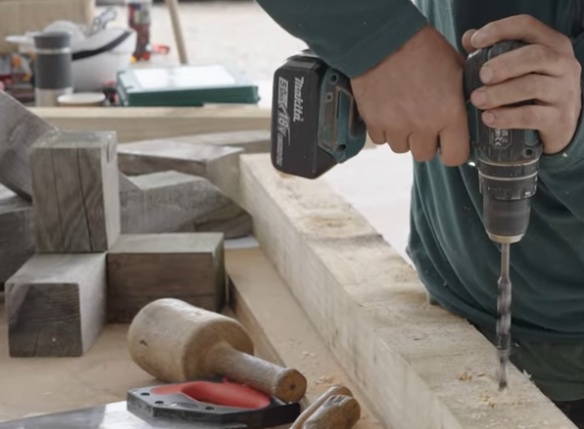
Mortises can be produced using bench mortisers, hollow chisel mortisers, router-based jigs, horizontal slot mortisers, or CNC routers. In traditional contexts they may be chiseled by hand. Factors affecting cost include mortise depth, width, access constraints, and whether multiple passes are required.
Cutting Tenons
Tenons may be cut with table saws, tenoning jigs, bandsaws, dedicated tenoning machines, or CNC equipment. Precision shoulders and cheek thickness are critical for fit. Labor time is affected by the number of shoulders, length of the tenon, and whether haunches or other features are included.
Fitting, Adjusting, and Trial Assembly
After cutting, joints often require test fitting, minor paring, and adjustment to achieve the specified fit. In structural or visible assemblies, trial assembly may be needed to verify squareness and alignment before glue-up or pegging, adding non-cutting labor time.
Glue-Up, Clamping, and Mechanical Fastening
Assembly labor includes applying adhesive (if used), inserting pegs or wedges, aligning components, and setting clamps. Complex assemblies with many joints may require specific clamping sequences and fixtures, extending assembly time and increasing total labor cost.
Material and Consumable Cost Considerations
Beyond raw lumber, several material and consumable categories affect mortise and tenon cost. While smaller than labor, they are important for precise estimates, especially in larger projects.
Wood Stock and Yield
Mortise and tenon joints typically require extra stock length to allow for clean shoulders and machining clearance. Yield losses from trimming and defect removal must be factored into the material budget. For structural or architectural projects, graded lumber or engineered timber may also carry a premium.
Adhesives, Pegs, and Wedges
Adhesive cost is usually low per joint but cumulative in large assemblies. Mechanical elements like wooden pegs, dowels, or wedges may be purchased or produced in-house. When pegs are structural or visible, tighter tolerances and material selection may increase cost.
Tooling, Sharpening, and Replacement
Cutters, bits, chisels, and saw blades dull over time. Hard materials, deep mortises, and large production runs accelerate wear, increasing sharpening frequency and replacement rates. Shops may account for this via a tooling surcharge or embed it in the general overhead rate.
Comparing Mortise and Tenon to Other Joinery Costs
Mortise and tenon joins compete with other joining methods such as dowels, biscuits, pocket screws, and mechanical fasteners. Cost comparisons must consider not only immediate production expense but also structural performance and durability, especially under repeated load or environmental change.
Mortise and Tenon vs Mechanical Fasteners
Screws, brackets, and metal connectors generally have lower immediate labor cost and are easier to install with basic tools. However, they often rely on the fastener rather than the wood-to-wood interface for strength. Over the lifecycle of the product, this may affect long-term reliability and appearance, particularly if fasteners loosen or corrode.
Mortise and Tenon vs Dowel or Biscuit Joints
Dowel and biscuit joints are efficient for panel and cabinet work, often cut with lower-cost equipment and minimal manual fitting. For some applications they provide adequate strength. Mortise and tenon joints typically offer a larger glue surface and better mechanical interlock, particularly beneficial in narrow or highly stressed components such as chair rails and table legs, at the cost of more complex machining.
Typical Cost Ranges and Example Scenarios
Actual prices depend on regional labor rates, shop overhead, and project conditions. Still, structured examples help clarify how different factors interact in practice.
| Scenario | Characteristics | Relative Per-Joint Cost | Main Cost Drivers |
|---|---|---|---|
| Simple furniture joint | Standard blind tenon, small section, moderate hardwood, machine-cut | Low to medium | Minimal setup, moderate labor, standard tooling |
| Complex chair joint | Angled tenon, compound geometry, high-strength requirement | Medium to high | Precision layout, fitting, multiple setup steps |
| Timber frame structural joint | Large section, deep mortise, pegs or wedges, structural load | High per joint, low per structure unit strength | Heavy material handling, large tooling, structural tolerances |
| High-volume CNC production | Standardized geometry, repeated parts, automated machining | Low per joint after setup | Programming and fixturing, amortized over large batch |
Applications and Their Specific Cost Patterns
Mortise and tenon joints appear in multiple domains, each with distinct cost structures and expectations. Recognizing application-specific patterns helps in planning and comparing proposals.
Furniture and Seating
Chairs, stools, benches, and tables rely heavily on mortise and tenon joints for their frames. Chairs in particular involve many angled joints, tight tolerances for racking resistance, and complex assembly sequences. This combination often leads to higher per-joint cost but is essential for durability under repeated dynamic loading.
Cabinetry, Doors, and Windows
Frame-and-panel doors, cabinet frames, and window sashes frequently use mortise and tenon joinery. Cost is influenced by profile complexity, glass or panel accommodation, and alignment requirements with surrounding hardware. Precision is critical for proper closing and sealing, which can increase labor time in marking, machining, and fitting.
Timber Framing and Structural Work
In timber framing, large-scale mortise and tenon joints are used in beams, posts, and braces. These joints must carry substantial loads and accommodate seasonal movement. Costs are shaped by log or timber size, required grading, joint design (for example, housed mortise and tenon vs simple open tenon), and erection method. While each joint is comparatively expensive, it replaces many smaller mechanical connectors and can offer long service life.
Restoration and Heritage Projects
In restoration, matching existing mortise and tenon patterns and dimensions is often necessary. This can require selective disassembly, irregular layout, and careful removal of damaged material. Labor is typically intensive, with detailed documentation and testing. As a result, restoration mortise and tenon work often carries a premium relative to new construction.
Cost-Related Issues and Practical Considerations
Cost is not solely determined by raw inputs. Practical constraints and workflow decisions also influence the final price. Recognizing typical issues can help in scope planning and communication between client and fabricator.
Hidden Complexity in Design and Drawings
Drawings that appear simple may conceal complex joinery. For example, a minimalistic frame with slender elements may require intricate internal mortise and tenon configurations to achieve adequate strength. If these details are not explicitly defined from the start, later design changes can increase cost as the joinery scheme is clarified.
Access, Handling, and Logistics
Large or heavy components, especially in structural work, require lifting equipment, additional personnel, and specialized fixtures for safe machining and assembly. These handling requirements may significantly affect labor time even when the joint geometry is straightforward.
Coordination with Other Trades and Components
Mortise and tenon joints in architectural contexts often interface with metal hardware, glazing, insulation components, or other materials. Mismatches in tolerance assumptions or dimensional references can lead to rework or delays, indirectly raising joinery costs. Early coordination reduces the likelihood of such complications.
Evaluating Value Beyond Face Cost
Price alone does not capture the technical and functional value of mortise and tenon joinery. Evaluating value involves considering strength, service life, maintenance requirements, and performance under environmental changes.
Structural Performance and Durability
Mortise and tenon joints provide a large mechanical engagement area between components, leading to good load distribution and resistance to racking. This is particularly valuable in frames subjected to repeated dynamic loads or in structures where long-term dimensional stability is important. The initial cost premium can be offset by reduced repair frequency and extended service life.
Serviceability and Repair Options
In some designs, pegged or wedged mortise and tenon joints can be partially disassembled for repair or replacement of components, avoiding complete reconstruction of an assembly. This capability can lower lifecycle cost, especially in high-value furniture or architectural elements.
Consistency of Performance Across Joints
With appropriate layout and controlled fabrication, mortise and tenon joints can deliver consistent performance across a large assembly. This consistency is beneficial where predictable load paths and deformation behavior are required, such as in trussed frames or seating systems with multiple identical joints.
Guidelines for Budgeting and Cost Control
Effective cost management for mortise and tenon work relies on clear specifications, early planning, and realistic alignment between design and fabrication methods.
Defining Requirements Clearly
Specifying joint types, locations, required tolerances, and surface quality at the design stage helps fabricators estimate accurately. Ambiguous or incomplete specifications often lead to contingencies or change orders, raising final costs.
Aligning Design with Available Equipment
Designing joints that match the capabilities of the chosen shop’s equipment can reduce setup complexity and production time. For example, standardizing mortise sizes or tenon thicknesses across an assembly can simplify tooling choices and fixture design.
Optimizing Batch Sizes and Repetition
Grouping similar joints and components into larger runs allows shops to take advantage of efficient production setups. Where practical, consolidating orders or standardizing components can lower per-joint cost by spreading setup time over more units.
How to Request and Compare Quotes
Obtaining comparable quotes requires providing consistent information to each fabricator and understanding how they structure their pricing.
| Element | Description | Impact on Cost |
|---|---|---|
| Drawings and dimensions | Scaled drawings with joint positions and sizes | Determines complexity, labor estimates, and tooling |
| Material specification | Species, grade, section sizes, and moisture content | Affects machining effort, waste, and tooling wear |
| Quantity and batch structure | Number of identical and unique joints or assemblies | Influences setup amortization and unit pricing |
| Tolerance and fit requirements | Acceptable dimensional and fit ranges, structural needs | Drives precision, inspection, and fitting labor |
| Surface and finish requirements | Visible surfaces, pre-finishing, or post-assembly finishing | Changes handling sequence and assembly methods |
| Assembly and installation scope | Shop assembly only, or on-site installation included | Determines additional labor, travel, and logistics |
When comparing quotes, it is important to determine whether each provider is including the same scope, such as material supply, finishing, and installation. Clarifying whether prices are per joint, per assembly, or for the entire project helps ensure that cost comparisons are meaningful.
Conclusion
Mortise and tenon joinery involves a complex interaction of material, labor, tooling, and design requirements. Costs are driven by species and dimensions, joint geometry, production method, batch size, and precision needs. When evaluating pricing, it is necessary to consider not only the immediate expense but also structural performance, durability, and lifecycle value. Clear specifications, alignment between design and fabrication methods, and careful comparison of quotes support accurate budgeting and effective use of mortise and tenon joints across furniture, cabinetry, and structural applications.