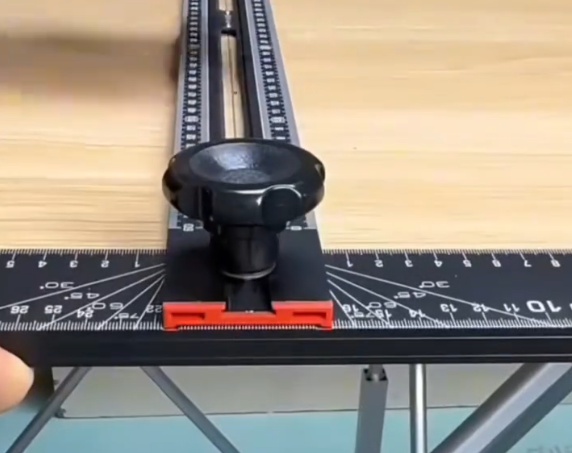
Tolerances and precision in wood milling define how closely the finished dimensions of a wooden component match its design. Understanding realistic accuracy ranges, material behavior, and measurement methods is essential for producing reliable, repeatable results in woodworking, whether using hand-fed machines or CNC equipment.
Fundamentals of Tolerance in Woodworking
In manufacturing, tolerance is the permitted variation in a part’s size or geometry from its nominal (target) dimension. In wood milling, tolerances must account not only for machine capability but also for the variable and anisotropic nature of wood.
Wood milling tolerances are typically expressed as plus/minus values. For example, a rail width of 50.0 mm with a ±0.2 mm tolerance means any width between 49.8 mm and 50.2 mm is accepted. Unlike metals, wood is hygroscopic and anisotropic, so tolerances must be set with awareness of dimensional changes over time.
| Application | Typical Tolerance Range | Notes |
|---|---|---|
| Rough cutting (panel sizing, ripping) | ±0.5 mm to ±1.5 mm | Allows for later planing or sanding |
| General cabinet parts (CNC or well-tuned machines) | ±0.2 mm to ±0.5 mm | Usually adequate for furniture and cabinetry |
| Fine joinery fit (tenons, mortises, dados) | ±0.05 mm to ±0.2 mm at the joint area | Requires controlled environment and stable stock |
| Decorative non-structural profiling | ±0.5 mm or looser | Dimensional accuracy less critical |
| Engineered wood components (e.g., fixtures, jigs) | ±0.1 mm to ±0.3 mm | Often machined in stable sheet goods |
These ranges are practical rather than absolute. The achievable tolerance depends on machine condition, tooling quality, operator skill, and environmental control.
Material Characteristics Affecting Precision
Wood is a complex, anisotropic material. Its behavior under cutting and over time has a direct impact on tolerances and on how repeatable a milling process can be.
Moisture Content and Dimensional Change
Wood continually exchanges moisture with the surrounding air. Dimensional changes occur mostly across the grain, not along it. For many species:
- Tangential shrinkage from fiber saturation to oven dry may be about 6–10 %.
- Radial shrinkage over the same range may be about 3–6 %.
In practical shop conditions, a change of 1 % moisture content can cause thickness or width variation on the order of tenths of a millimeter for narrow parts, and more for wide panels. This means a part milled to ±0.05 mm in a humid environment may move out of that tolerance when the relative humidity drops or rises.
Species and Grain Orientation
Different species have different density, hardness, and shrinkage characteristics. Stable species with lower shrinkage and moderate density are generally easier to hold to tight tolerances. Grain orientation also affects accuracy:
- Quarter-sawn boards tend to move less in width than flat-sawn boards.
- Boards with straight, uniform grain are more stable than boards with pronounced grain deviation, knots, or reaction wood.
These factors influence not only long-term dimensional stability but also immediate cutting behavior such as tear-out, burning risk, and deflection under tool pressure.
Engineered Wood Products
Plywood, MDF, and other panel products are more dimensionally stable than solid wood, especially in-plane. For these materials:
Thickness tolerance from the factory is often on the order of ±0.1–0.3 mm, depending on grade and manufacturer. Machining accuracy on CNC routers can therefore be more reliably translated into final part dimensions, since the material movement after cutting is reduced compared to solid wood.
Machine Types and Their Accuracy Potential
Different wood milling equipment offers different levels of inherent accuracy and repeatability. The achievable tolerance is a combination of machine design, mechanical condition, and how it is set up and used.
Table Saws and Panel Saws
For ripping and crosscutting operations:
- Well-aligned cabinet table saws can reliably hold around ±0.3–0.5 mm on width for typical workpieces.
- Sliding table panel saws used in cabinet shops can improve repeatability for sheet goods, often in the ±0.2–0.3 mm range when properly maintained.
Accuracy depends on fence straightness, blade stiffness, arbor runout, and feed technique. Thin-kerf or dull blades, misalignment, and excessive feed force can degrade accuracy.
Planers and Thicknessers
Thickness planers are used to bring stock to a target thickness and to flatten surfaces. With a solid machine and sharp knives or a helical head:
Thickness tolerance of ±0.1–0.2 mm is often achievable for moderate board widths under controlled conditions. Wider boards and boards with pronounced internal stress can exit the planer with some deviation or spring-back, reducing effective tolerance.
Jointers
Jointers are usually employed to produce straight and flat reference surfaces rather than to hit exact dimensions. However, the flatness and straightness they generate are critical to dimensional accuracy further downstream.
When properly tuned, a jointer can produce edges and faces flat and straight to within tenths of a millimeter over typical furniture-length boards. This supports tight tolerances in subsequent milling and assembly.
Routers and Spindle Moulders
Router tables and spindle moulders shape edges, cut joinery, and profile components. Dimensional control is influenced by fence setup, cutter geometry, and bearing accuracy.
When using jigs and stops, these machines can achieve tight tolerances for joinery such as tenons, grooves, and rebates. Variations usually arise from setup repeatability, stock positioning, and slight deflection under cutting loads.
CNC Routers and Machining Centers
CNC routers and machining centers are designed for precise, repeatable positioning. Typical positioning accuracy in woodworking CNC machines may be around ±0.05–0.1 mm under ideal conditions, though the effective tolerance in wood often ends up slightly larger due to material behavior and tool deflection.
Advantages include:
- Programmable tool paths with consistent repeatability across many parts.
- Ability to compensate for tool radius and wear in software.
- Integrated probing or reference systems for more accurate setups.
Even with high-precision motion systems, actual dimensional results depend on material stability, tool sharpness, clamping quality, and environmental control.
Cutting Tools and Their Influence on Tolerance
Cutting tools, their geometry, and their condition play a major role in how closely a milling process can hold to the intended dimension.
Tool Material and Sharpness
Common tooling materials in wood milling include high-speed steel (HSS), carbide-tipped tools, and solid carbide cutters. Carbide provides superior edge retention, supporting more consistent dimensions across longer runs.
Dull tools cause increased cutting forces, more heat, and greater deflection, leading to variation in dimensions. Maintaining sharp tools and establishing replacement or sharpening intervals is essential to control tolerances in production settings.
Tool Geometry and Diameter Control
For rotary tools like router bits and end mills, actual cutting diameter must be known. For example:
- A nominal 12 mm bit may measure 11.95 mm after repeated sharpening.
- Tool runout can add eccentricity, effectively changing the cutting radius during rotation.
In CNC applications, tool diameter can be probed or measured and then entered into the tool library, allowing compensation in the tool path to maintain target dimensions.
Tool Deflection and Cutting Forces
Long or slender tools, aggressive feed rates, and heavy depths of cut increase tool deflection. This is especially relevant in wood where cutting resistance varies with grain direction and density changes.
Reducing pass depth, using appropriate spindle speeds and feed rates, and choosing stiffer tooling can reduce deflection and improve dimensional consistency.
Setup, Fixturing, and Workholding
Even highly accurate machines and tools cannot maintain tight tolerances if the workpiece is not properly supported and positioned. Setup and fixturing are critical for precision.
Reference Surfaces and Datums
A consistent reference system is fundamental to dimensional accuracy. In woodworking, this often means establishing one face and one edge as reference surfaces, then performing subsequent operations from those references.
On CNC machines, a datum coordinate system is set using mechanical stops, pins, or probing routines. Locating all parts against the same datums ensures consistent relationships between features on different faces and components.
Clamping and Vacuum Hold-Down
Mechanical clamps, vises, and vacuum tables are used to secure workpieces during milling. Inadequate hold-down can lead to movement or vibration, which immediately affects dimensional accuracy and surface finish.
For vacuum hold-down systems, important considerations include:
- Sufficient vacuum level for the part size and material porosity.
- Use of spoilboards and gasket tracks to maintain a sealed area.
- Distributing machining forces to avoid lifting or shifting.
Thin panels, narrow strips, or porous materials may require specialized fixturing or auxiliary supports to maintain both flatness and positional accuracy.
Alignment and Pitch Errors
Machine alignment, such as table flatness, fence squareness, and spindle-to-table perpendicularity, directly affects the ability to hit tight tolerances. Mechanical wear can lead to pitch or lead errors, especially in screw-driven axes of CNC machines.
Routine inspection and calibration, such as checking squareness with precision squares or dial indicators, helps keep the system within acceptable tolerance limits. Any misalignment can manifest as systematic dimensional deviations in milled parts.
Measurement and Inspection Methods
Reliably achieving tolerances requires appropriate metrology. Woodworking shops use a range of instruments depending on required precision, part size, and budget.
Basic Measuring Tools
Common tools include tape measures, steel rules, and combination squares. While adequate for many construction tasks, their resolution and potential for user error limit their usefulness for very tight tolerances.
Availability of calibrated measuring tools with clear graduations improves measurement consistency. For finer work, especially in furniture and joinery, greater precision is often needed.
Calipers and Micrometers
Digital and analog calipers with 0.01 mm resolution are widely used in precision woodworking. They allow accurate checks of thickness, width, and diameter. Care must be taken with measuring techniques to avoid compressing soft fibers or misreading due to parallax.
Micrometers can measure thickness or diameter with higher resolution (often 0.001 mm). In wood, this high resolution must be balanced against the material’s variability and compressibility; micrometer readings can be sensitive to measurement force and surface roughness.
Dial Indicators and Height Gauges
Dial indicators are useful for checking machine alignment, runout, and flatness. Mounting an indicator on a magnetic base or fixture allows measurement of deviation as a part or tool is moved.
Height gauges used on flat reference surfaces can accurately set cutter heights, fence positions, or part dimensions. They contribute to more repeatable setups and better control of tolerances across multiple parts.
Measurement Strategy in Wood
Because wood can change dimension over time, measurement strategy often includes:
- Measuring parts at consistent environmental conditions where possible.
- Allowing freshly machined parts to rest before final dimensioning.
- Measuring batches of parts to detect process drift or systematic error.
While extremely tight tolerances may be technically measurable, they may have limited practical value if the wood will move during acclimatization or in service.
Dimensional Tolerances for Common Woodworking Operations
Different operations in wood milling require different degrees of precision. The following table summarizes typical tolerance expectations for selected operations, recognizing that exact values depend on equipment, material, and application requirements.
| Operation | Target Dimension | Typical Tolerance | Comments |
|---|---|---|---|
| Panel cutting on panel saw | Width/length | ±0.3–0.5 mm | For cabinet-grade plywood or MDF |
| Thickness planing | Board thickness | ±0.1–0.2 mm | Better results in stable material with light final passes |
| Edge jointing | Straightness/flatness | Deviation within 0.1–0.3 mm over 1–2 m | Critical for panel glue-ups |
| CNC pocket depth | Depth of cut | ±0.05–0.15 mm | Influenced by tool calibration and machine rigidity |
| CNC hole position (e.g., shelf pins) | Hole center location | ±0.1–0.2 mm | Ensures alignment of hardware and components |
| Tenon thickness | Fit in mortise | ±0.05–0.15 mm | Fit is often fine-tuned by test cuts and hand adjustment |
| Face frame rail length | End-to-end length | ±0.2–0.3 mm | Controls squareness and reveal consistency |
| Decorative moulding profile | Profile depth/width | ±0.3–0.6 mm | Visual continuity more important than absolute dimension |
These ranges serve as practical benchmarks. Specific projects may require tighter or looser tolerances, particularly where components interface with hardware, glass, metal parts, or pre-existing structures.
Environmental Control and Its Role in Precision
Environmental conditions such as temperature and humidity significantly influence dimensional accuracy in wood milling. Because wood moves with changes in moisture content, controlling the environment is essential for maintaining tolerances.
Shop Climate and Wood Equilibrium
Wood seeks equilibrium moisture content (EMC) with the ambient relative humidity. In climates with large seasonal variation, EMC changes can cause noticeable dimensional changes in assembled work.
For precision woodworking:
- Maintaining a relatively stable indoor humidity range, commonly around 35–55 % relative humidity, helps limit movement.
- Allowing incoming lumber and panels to acclimatize to shop conditions before milling reduces post-machining movement.
This approach supports more reliable dimensions at the time of assembly and reduces the chance of parts drifting out of tolerance due to moisture-related changes.
Temperature Effects
Temperature has a smaller direct effect on wood dimensions than humidity, but it affects machinery and measurement tools. Metal components expand with temperature changes, potentially affecting calibration and alignment.
Consistent temperature during both machining and measurement contributes to more repeatable results, especially for work requiring tight tolerances over long lengths or in large assemblies.
Tolerance Stack-Up in Wood Assemblies
In real projects, individual part tolerances accumulate in assemblies. The combined effect of multiple dimensional variations, known as tolerance stack-up, must be considered to ensure that the final product fits and functions as intended.
Understanding Accumulated Variation
If several parts each have their own permissible dimensional variation, the worst-case difference between the smallest and largest possible assembled dimension can be larger than the tolerance of any single part. For example:
- Four rails each ±0.3 mm in length can create a total potential variation of more than 1 mm across a frame or case.
In woodworking assemblies such as cabinets, doors, and frames, this can affect squareness, reveal widths, and hardware fit. Planning tolerances with these accumulations in mind is essential.
Strategies to Manage Stack-Up
Effective methods to manage tolerance stack-up include:
- Using reference-based assembly methods (e.g., building off a fixed datum such as a cabinet bottom or reference edge).
- Machining critical matching components in the same setup where possible, ensuring relative dimensions are tightly controlled.
- Allowing non-critical dimensions to float while keeping critical interfaces within tighter tolerances.
Working with relative dimensions and sub-assemblies helps maintain functional precision even when individual parts have moderate tolerances.
Balancing Tight Tolerances with Wood Behavior
While modern machines and measurement tools can support very tight geometric tolerances, wood’s physical properties limit the practical usefulness of extremely fine tolerances in many cases.
Practical Versus Nominal Precision
In metals or plastics, a tolerance of ±0.01 mm may be meaningful for certain components. In wood, such a tolerance is often lost to residual stresses, moisture changes, and surface fiber behavior.
For most woodworking applications, a balanced approach is used:
- Critical interfaces (such as hardware mounting points or precise joinery) may target tighter tolerances.
- Non-critical dimensions (such as overall width of decorative parts, non-mating edges, or internal clearances) can have more generous tolerances.
This balance respects wood’s inherent variability while still achieving functional and aesthetic requirements.
Finishing, Sanding, and Their Effect on Dimensions
Post-machining operations like sanding and finishing can change dimensions subtly. Sanding may remove fractions of a millimeter, and some finishes can raise grain slightly before de-nibbing.
In precision work:
- Final sizing is often done after an initial surfacing pass and before heavy sanding.
- Tight-fitting joinery may be cut slightly oversized and then hand-fitted with minimal removal to maintain control over dimensions.
Understanding how each subsequent process affects size helps prevent departure from intended tolerances.
Quality Control and Process Consistency
Maintaining precision in wood milling is not only about individual measurements but also about consistent processes. Quality control practices help keep production within specified tolerances over time.
Sampling and In-Process Checks
In batch production, measuring every part can be impractical. Instead, a sampling strategy is often used:
- Checking the first piece to confirm setup.
- Inspecting parts periodically during a run to detect drift.
- Performing final checks on a smaller sample at the end of a batch.
Recorded measurements can reveal trends that indicate tool wear, machine movement, or environmental changes. Adjustments can then be made before parts fall outside acceptable limits.
Documentation and Repeatability
Documenting machine settings, tool data, and fixturing methods supports repeatability. In CNC environments, this includes tool libraries, setup sheets, and proven programs. In manual environments, jigs, templates, and stop blocks serve the same purpose.
By maintaining consistent methods, shops can repeatedly produce parts within known tolerance ranges, reducing rework and assembly issues.
Considerations When Specifying Tolerances in Wood
Specifying tolerances for wood components requires attention to both functional requirements and material behavior. Excessively tight tolerances can increase cost and complexity without meaningful benefit, while overly loose tolerances can compromise fit and appearance.
Functional Requirements of the Part
The intended function guides tolerance decisions. For instance:
- A door that must align precisely with hardware and adjacent panels may require tighter tolerances around hinge mortises and latch hardware locations.
- A trim piece used solely for visual coverage may be acceptable with more relaxed tolerances, as long as gaps and misalignment are not visible.
Matching tolerance levels to actual performance needs allows efficient use of machining capability and reduces unnecessary rejects.
Service Conditions and Long-Term Stability
Parts exposed to varying humidity, temperature, or load conditions will move more than parts kept in stable environments. When specifying tolerances, it is important to consider conditions such as:
- Indoor climate-controlled environments versus unconditioned spaces.
- Exposure to direct sunlight, which can heat surfaces and dry wood unevenly.
- Structural loads or mechanical forces that may cause creep or deformation.
Allowing appropriate clearances, expansion gaps, or flexible joints can prevent binding, cracking, or warping, even if the initial machining tolerances are tight.
Economical Use of Precision
Higher precision often requires more time, more careful setups, and more frequent tool maintenance. The cost of achieving a given tolerance must be weighed against its benefit to the final product.
By distinguishing between critical and non-critical dimensions, shops can allocate resources where they have the most impact, ensuring both technical performance and efficient production.
Summary
Tolerances and precision in wood milling involve an interplay of machine capability, tooling, material behavior, environmental conditions, and measurement methods. While woodworking often cannot maintain the extremely tight tolerances common in metalworking, modern machines and controlled processes can routinely hold dimensions within ranges suited to demanding furniture, cabinetry, and engineered wood products.
Understanding realistic tolerance ranges, planning for wood movement, employing appropriate metrology, and using consistent setups all contribute to accurate, repeatable results. By aligning specified tolerances with functional needs and material characteristics, woodworkers and manufacturers can produce components that fit correctly, assemble smoothly, and perform reliably over time.