Overview of Wood Machining
Wood machining covers all controlled cutting and shaping operations that transform solid wood, engineered wood, or panel products into usable components. It bridges raw material preparation and final assembly, and is applied in furniture production, cabinetry, flooring, doors and windows, interior fittings, joinery, and a wide range of industrial wood products.
Compared with metals, wood machining must deal with anisotropy (different properties along and across the grain), variable density, and moisture content. These factors significantly influence tool selection, cutting parameters, achievable tolerances, and production costs.
Modern wood machining combines traditional machines (table saws, planers, shapers) with CNC equipment (CNC routers, machining centers, nesting machines). The correct combination depends on volume, complexity, accuracy requirements, and budget.
Material Types and Their Machining Behavior
Different wood materials respond differently to machining. Understanding their behavior is essential for selecting tools and parameters.
Solid Wood
Solid wood is anisotropic and heterogeneous. Properties vary by species, growth conditions, and moisture content. Key aspects:
- Hardwoods (e.g., oak, maple, beech) are generally denser and require higher cutting forces and sharper tools than softwoods (e.g., pine, spruce).
- Machining parallel to the grain typically yields better surface finish than cross-grain cutting but can cause fiber lifting if the cutting direction is unfavorable.
- Moisture content affects chip formation, cutting forces, and risk of burning or glazing.
Engineered Wood and Panel Products
Engineered products often contain adhesives, fillers, and layered structures that strongly influence tool wear and cutting quality.
Common types include:
Plywood: Cross-laminated veneers with alternating grain directions. It machines relatively cleanly but can splinter at edges if unsupported. Carbide tools are standard.
MDF (Medium Density Fiberboard): Homogeneous fiber board with resin binders. Offers uniform machining behavior but causes abrasive wear due to high mineral content in some grades. It allows fine detail but can generate fine dust requiring efficient extraction.
Particleboard and Chipboard: Coarser particles bonded with resin. Edge machining can result in chip-out and weak edges. Coated versions (melamine-faced board) require optimized tools and parameters to avoid chipping the decorative layer.
Laminated and Veneered Panels: Surface layers of melamine, high-pressure laminate, or natural veneer over a core. Tool geometry and support at exit points are critical to avoid delamination or chipping of the surface layer.
Influence of Moisture Content and Defects
Moisture content between 8% and 12% is common for indoor applications and generally favorable for machining. Higher moisture can soften fibers and reduce cutting forces, but may lead to fuzzy surfaces and dimensional instability after machining. Very dry wood can be brittle, showing more chip-out and cracking, and may burn more easily at high cutting speeds.
Defects such as knots, checks, resin pockets, and grain deviation influence cutting forces and tool life. Knots are typically harder and abrasive, and can cause sudden force peaks, vibration, and surface defects.
Primary Wood Machining Processes
Wood machining processes can be grouped into material separation (cutting and sawing), surface generation and dimensioning (planing and milling), shaping (routing, profiling, turning), hole-making (drilling, boring), and finishing operations (sanding, edge machining).
Sawing and Cutting
Sawing is the primary method for cutting wood into boards, components, or nested shapes. It uses toothed blades to remove material as kerf.
Common sawing operations include:
Rip sawing: Cutting along the grain; used for producing boards and strips from larger stock. Requires rip tooth geometry optimized for along-grain cutting.
Crosscutting: Cutting across the grain; used for length accuracy and trimming. Crosscut teeth have different geometry to cleanly sever fibers.
Panel and sheet cutting: Large format cutting of panels on sliding table saws, vertical panel saws, or beam saws. Industrial panel saws often use scoring blades to prevent chipping on laminated surfaces.
Planing and Thicknessing
Planing creates flat, smooth surfaces and defines thickness. A jointer (surface planer) establishes a reference face and edge, while a thickness planer creates parallel faces at specified thickness.
Key aspects:
- Helical or spiral cutterheads with carbide inserts provide quieter operation, improved surface finish, and better performance on difficult grain compared with straight-knife heads.
- Feed speed, depth of cut, and knife sharpness determine surface quality and risk of tear-out.
- Proper infeed and outfeed support reduces snipe and surface defects at board ends.
Milling and Routing
Milling and routing shape edges, profiles, grooves, slots, and 3D contours using rotary cutters. In woodworking, “routing” often refers to high-speed milling with smaller tools in routers or CNC machines.
Common milling operations:
Edge profiling: Creating decorative or functional profiles on panel edges (e.g., chamfers, radii, tongue-and-groove, flooring profiles).
Grooving and slotting: Producing dados, grooves for panels, and slots for hardware or joinery.
Contour milling: Shaping curved components, stair parts, mouldings, and 3D surfaces.
On CNC routers and machining centers, milling is used for nested-based manufacturing, where parts are cut directly from full panels with optimized nesting layouts to minimize waste.
Drilling, Boring, and Mortising
Hole-making operations support hardware installation and joinery. They are typically classified as:
Drilling: Conventional holes using twist drills, brad point bits, or Forstner bits for blind flat-bottomed holes.
Line boring: Multiple holes in standardized patterns (e.g., 32 mm system) for cabinet hardware. Dedicated multi-spindle boring machines or CNC machining centers are used.
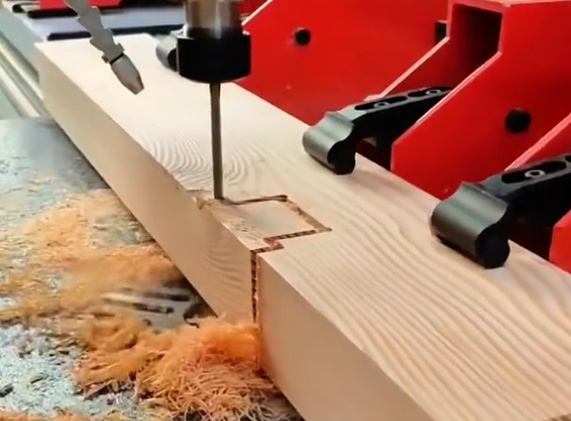
Mortising: Rectangular or slot-like cavities for mortise-and-tenon or other joints, created by chain mortisers, hollow chisel mortisers, slot mortisers, or CNC milling.
Hole location accuracy is critical for assembly alignment and fit of hinges, dowels, and connectors.
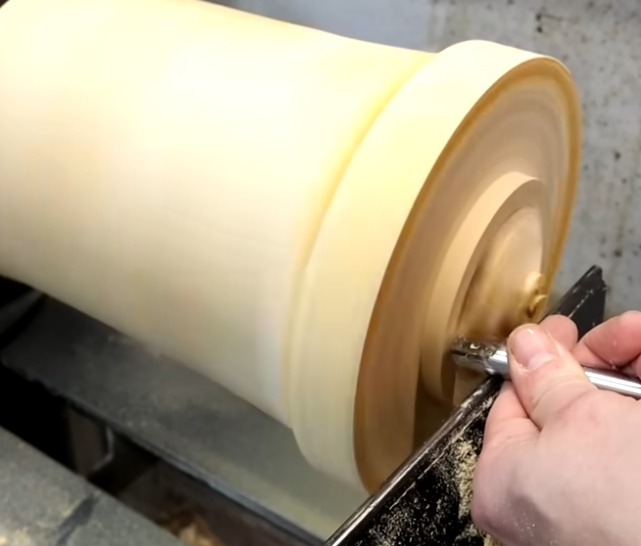
Turning
Wood turning shapes rotational parts by rotating the workpiece against stationary cutting tools. It is used for furniture legs, stair balusters, bowls, and decorative components.
Key parameters include spindle speed (rpm), tool presentation angle, feed rate (manual or CNC-controlled), and support of slender workpieces to avoid vibration and chatter. CNC lathes can replicate complex profiles with high repeatability.
Grinding, Sanding, and Surface Preparation
Sanding and grinding refine surfaces after cutting and shaping. In wood machining, sanding is dominant.
Typical operations:
Belt sanding: Wide belt sanders for panel calibration and surface preparation, narrow belts for edges and narrow components.
Orbital and random orbital sanding: Portable tools or integrated sanding units on production lines for final surface smoothing before finishing.
Profile sanding: Specialized sanding heads for mouldings and complex shapes.
Abrasive grit size progression (e.g., P80 → P120 → P180 → P240) influences surface roughness and finishing quality. Excessive sanding can round sharp edges and alter dimensions.
Special Processes: CNC Nesting, Laser and Waterjet Cutting
Besides conventional processes, some applications use additional cutting technologies:
CNC nesting: Arranging part geometries on large panels to maximize material utilization. CNC routers cut the nested layout in a single program cycle.
Laser cutting: Used for thin wood and decorative work. It provides very fine detail but may char edges and is limited in thickness.
Waterjet cutting: Less common in wood; can be used with lower pressures or combined processes for certain composite wood products, where thermal effects must be avoided.
Wood Machining Tools and Equipment
Wood machining depends heavily on appropriate machine tools and cutting tools. Tool material, geometry, and machine capabilities determine productivity, accuracy, and finish.
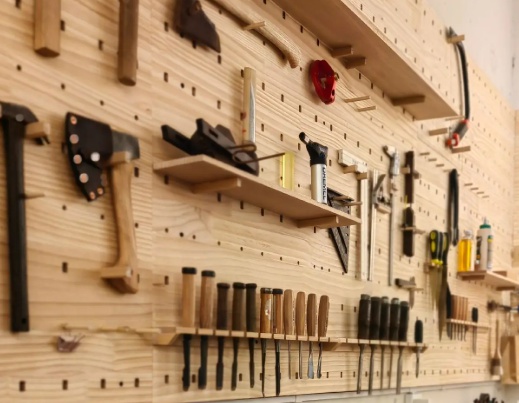
Manual and Conventional Machines
Traditional woodworking machines remain widely used in small to medium-size workshops:
Table saws and sliding table saws: For ripping and crosscutting wood and panels, with large rip capacity and precise fences.
Band saws: For cutting curves and resawing thicker stock into thinner boards or veneers.
Jointers and thickness planers: For straightening and dimensioning boards.
Spindle moulders (shapers): For edge profiling and moulding with large-diameter cutterheads.
Drill presses and mortisers: For hole-making and joinery preparation.
These machines require skilled operators for safe and accurate results. They are flexible but typically less automated than CNC systems.
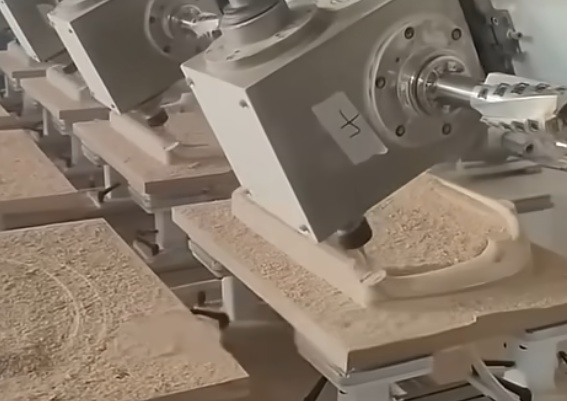
CNC Routers and Machining Centers
CNC routers and machining centers provide automated, repeatable machining capable of handling complex geometries.
Typical configurations:
3-axis CNC routers: X-Y motion in the panel plane with Z motion for vertical tool positioning. Suitable for nesting, grooving, profiling, and drilling from one side.
5-axis CNC machining centers: Additional rotational axes allow undercuts, complex 3D shaping, and machining on multiple faces without re-clamping.
Key subsystems include vacuum tables for workholding, automatic tool changers, dust extraction interfaces, and integrated drilling heads for high-speed hole-making.
Cutting Tools and Tool Materials
Cutting tools for wood include circular saw blades, straight and spiral router bits, profile cutters, drills, and insert-based cutterheads.
Common tool materials:
High-speed steel (HSS): Offers sharp cutting edges and is easy to sharpen, but limited wear resistance compared with carbides. Used in certain drilling, turning, and specialty cutting operations, especially for softer wood.
Tungsten carbide (solid or tipped): Provides high wear resistance and heat resistance, suitable for abrasive materials like MDF and laminated panels. Carbide-tipped saw blades and insert tools are standard in industrial applications.
Polycrystalline diamond (PCD): Extremely high wear resistance, especially suited for large production volumes, highly abrasive composites, and coated panels. PCD tools have higher upfront cost but longer life and more stable cutting quality.
Tool Geometry and Cutting Edge Design
Tool geometry influences cutting forces, chip formation, surface quality, and risk of chip-out. Important parameters include rake angle, clearance angle, cutting edge inclination, and hook angle (for saws).
For router bits and milling cutters:
Upcut spiral: Pulls chips upward, improving chip evacuation but increasing risk of edge chipping on top surfaces.
Downcut spiral: Presses fibers downward, resulting in clean top edges but requiring care with chip evacuation and heat buildup.
Compression (up/down) spiral: Combines upcut at the tip and downcut near the shank to produce clean edges on both faces of panels.
For saw blades, the choice of alternate top bevel (ATB), triple chip grind (TCG), or flat tooth geometry depends on material and desired cut quality.
Workholding, Fixturing, and Dust Extraction
Reliable workholding ensures dimensional accuracy and safety during machining.
Typical methods:
Mechanical clamping: Vises, clamps, and stops are common on conventional machines.
Vacuum clamping: Vacuum tables or pods hold panels and components on CNC machines, allowing unobstructed tool access.
Dedicated jigs and fixtures: Custom fixtures for repeat machining of complex or curved parts, often used in chair and stair production.
Dust extraction is critical for machine performance, component quality, and working conditions. Efficient chip and dust removal reduces heat buildup, prevents clogging, and maintains visibility of cutting lines and parts.
Key Machining Parameters and Their Effects
In wood machining, cutting parameters determine the balance between productivity, tool life, surface quality, and dimensional accuracy. Parameter optimization is usually based on machine capability, tool specifications, and material properties.
Spindle Speed, Cutting Speed, and Feed Rate
Spindle speed (n, rpm) and tool diameter (D) define the cutting speed (Vc), usually expressed in m/s for saw blades or m/min for routing and milling. Feed rate (vf, mm/min or m/min) describes how quickly the tool advances relative to the workpiece.
For routers and milling cutters, higher cutting speeds typically improve surface finish and reduce cutting forces up to a point, after which heat and tool wear increase. Feed rate must be balanced to ensure that each tooth removes sufficient material without causing overload or burning.
Chip Load and Depth of Cut
Chip load (fz, mm/tooth) is a central parameter representing how much material each tooth removes per revolution. It depends on feed rate, spindle speed, and number of effective cutting edges.
Depth of cut (ap) and width of cut (ae) determine the cross-sectional area of the removed material. In wood machining, multiple shallow passes are often preferable to a single deep pass for improved surface quality and reduced tear-out, especially in hardwoods and composite panels.
Surface Finish and Dimensional Accuracy
Surface finish is influenced by:
- Tool sharpness and geometry
- Material properties and grain orientation
- Feed per tooth and residual scallop height
- Machine stiffness and vibration
Dimensional accuracy depends on machine precision, thermal and moisture-induced expansion or shrinkage of wood, clamping method, and accumulated tolerances between operations. For high-precision components, machining sequences are planned to minimize time between critical operations and finishing.
Tool Wear, Heat, and Burning
Wood, particularly engineered panels, can be abrasive. Tool wear affects cutting forces, surface quality, and dimensional accuracy. Worn tools increase heat generation, which can lead to burning or glazing of wood surfaces and adhesive layers.
Typical signs of excessive wear or incorrect parameters include dark burn marks, melted or discolored laminates, fiber tearing instead of clean cutting, and increased spindle load. Maintaining adequate chip load, effective dust extraction, and suitable tool material reduces these issues.
Process Planning and Workflow in Wood Machining
Efficient wood machining requires systematic process planning from design to finished part. This planning determines the sequence of operations, machine choices, tooling, and quality control steps.
From Design to CNC Programming
Components are typically designed in CAD software, then processed through CAM systems for toolpath generation. Nesting algorithms optimize panel layouts for sheet-based production, while tool libraries ensure that toolpaths are compatible with available cutters and spindles.
Program generation includes:
Selection of appropriate tool paths (e.g., contour, pocketing, drilling cycles), definition of cutting parameters (speeds, feeds, step down, step over), and definition of entry/exit strategies to reduce visible marks and chip-out.
Operation Sequencing
Sequencing affects both quality and cost. A common approach is:
1) Rough cutting to separate parts or remove most of the material.
2) Intermediate operations such as drilling, grooving, and profiling.
3) Finish passes for critical dimensions and surfaces.
4) Sanding and surface preparation.
The sequence must consider stability of the part after material removal, accessibility for tools, and reduction of re-clamping and handling steps.
Quality Control and Tolerances
Quality control includes checking dimensions, squareness, hole positions, and surface condition. In many wood applications, tolerances are looser than in metal machining due to dimensional changes from moisture. Typical tolerances range from ±0.2 mm to ±1.0 mm depending on the part function and assembly method.
Measurement tools include calipers, gauges, templates, go/no-go fixtures, and coordinate measurement on critical parts. Process capability is improved by stable material conditioning, regular tool maintenance, and consistent machine setup.
Common Issues and Pain Points in Wood Machining
Manufacturers often encounter specific difficulties that influence quality and costs. Addressing these issues typically requires adjustments in tooling, parameters, and process organization.
Chip-Out, Tear-Out, and Splintering
Chip-out occurs when fibers are lifted and torn instead of being cleanly cut, especially at panel edges, cross-grain ends, or laminated surfaces. It leads to poor appearance and may render parts unusable without rework.
Key influences include cutting direction relative to grain, tool sharpness and geometry, unsupported exit edges, and excessive chip load. Techniques to reduce chip-out include using scoring saws on panel saws and beam saws, compression cutters for laminated panels, climb cutting in specific situations (with appropriate precautions), and sacrificial backing panels to support exit edges.
Dimensional Variability and Warping
Wood is sensitive to humidity changes. After machining, components can warp or change dimensions as they equilibrate with ambient conditions. Production planning must account for storage conditions before and after machining, and for balancing cuts on both sides of a component when possible.
Thin or asymmetric parts are particularly prone to deformation. Sequence planning that alternates machining on both sides can reduce stress imbalance in the workpiece.
Tool Life and Abrasive Wear in Engineered Panels
Engineered panels, especially those with high mineral content or hard decorative surfaces, accelerate tool wear. Frequent tool changes increase downtime and cost per part. PCD and high-performance carbides can mitigate this, but have higher acquisition costs.
Accurate monitoring of tool life, structured sharpening schedules, and appropriate selection of tool material help to maintain consistent cut quality while controlling costs.
Dust, Noise, and Cleanliness of Machining Areas
Wood machining generates large volumes of chips and fine dust. Without adequate extraction, dust affects operator health, machine reliability, and part quality. Fine dust can accumulate in machine housings, drive systems, and electronics, leading to increased maintenance.
Noise from high-speed spindles, saw blades, and airflows also needs to be managed through machine selection, enclosure of noisy elements where appropriate, and proper maintenance of cutting tools and extraction systems.
Cost Structure in Wood Machining
Understanding cost structure supports pricing decisions and investment planning. Wood machining costs can be divided into direct and indirect components, with strong influence from productivity, material utilization, and quality level.
Direct Costs: Material, Labor, and Machine Time
Material cost is often the largest individual cost item, especially for high-grade solid wood or specialized panels. Precision in nesting and cutting patterns has a significant effect on material utilization rates and offcut volumes.
Labor includes operators, programmers, setup technicians, and material handlers. Labor cost per part is influenced by automation degree, batch size, machine layout, and stability of production processes. Machine time cost reflects depreciation, energy consumption, and maintenance distributed over productive hours.
Tooling Costs and Maintenance
Tooling costs include purchase of saw blades, router bits, drills, cutterheads, inserts, and their sharpening or replacement. For high-volume production, cost per unit is strongly affected by tool life and achievable cutting length between sharpening cycles.
Preventive maintenance and systematic tool management help avoid unexpected stoppages due to breakage or poor cut quality. Tool presetting and quick-change systems reduce downtime during tool changes.
Overheads and Indirect Costs
Indirect costs comprise factory overheads such as building, utilities, compressed air and dust extraction systems, quality management, planning, and administration. These are usually allocated to products based on machine hours, labor hours, or material usage.
Effective scheduling and high machine utilization spread fixed overheads over more output, lowering the cost per part.
Cost Drivers for Different Machining Setups
Different production scenarios have specific cost profiles. For example, manual machining has lower initial investment but higher labor cost per unit and generally lower throughput. Industrial CNC machining requires higher capital expenditure but provides greater automation and repeatability.
The following table summarizes typical influences in three common production contexts.
| Setup Type | Main Strengths | Key Cost Drivers | Typical Applications |
|---|---|---|---|
| Manual / Conventional Machines | Low investment, high flexibility for unique parts, simple maintenance | Skilled labor time, setup time per job, rework due to operator variation | Custom furniture, prototyping, repair and restoration |
| Semi-automatic / Dedicated Machines | High throughput for specific tasks, reliable repeatability | Changeover time between product variants, jigs and fixtures, tooling for specific profiles | Repeat joinery, flooring, window and door components |
| CNC Routers and Machining Centers | Automation, complex geometry, integrated drilling and milling | Machine depreciation, programming and setup, advanced tooling and dust extraction | Cabinet manufacturing, nested panel processing, complex 3D components |
Calculate Your Wood Machining Cost
Wood Machining Cost Calculator
Estimating and Optimizing Machining Costs
Cost estimation methods allow manufacturers to evaluate process alternatives and pricing models. Cost per part is influenced by time per operation, material yield, rejection rates, and overhead allocation.
Cost per Part Calculation Basics
Basic cost estimation in wood machining includes:
Determining machining time from feed rates and path lengths for each operation, assigning hourly rates to machines and labor, estimating tool wear cost per meter of cut or per hole, and adding material cost based on net and scrap volumes.
In many cases, simplified models are calibrated using historical production data to reflect actual performance in a specific workshop or factory.
Impact of Feed Rate and Tool Life on Cost
Increasing feed rate reduces machining time but may decrease tool life and surface quality if taken beyond suitable limits. Conversely, very low feed rates may increase tool wear due to rubbing and heat buildup without proportional quality gains.
Choosing parameters that balance cycle time and tool life is central to cost optimization. The following simplified table shows how different strategies can influence cost components for a representative routing operation.
| Strategy | Feed Rate | Tool Life | Surface Quality | Estimated Cost per Part |
|---|---|---|---|---|
| Conservative | Low | Long | Very high | Medium (higher time, lower tool usage) |
| Balanced | Moderate | Medium | High | Low (optimized time and tool usage) |
| Aggressive | High | Short | Medium to low | Medium to high (short time, higher tool and rework cost) |
Batch Size, Changeover, and Setup Time
Batch size strongly affects cost distribution. For small batches and custom work, setup and programming time per part are significant. For large series, setup costs are spread over many units, shifting emphasis to cycle time and tooling costs.
Reducing setup time through standardized tools, quick-change systems, and well-organized fixtures allows smaller economic batch sizes and more flexible production planning.
Safety, Standards, and Practical Considerations
Safe and reliable wood machining requires appropriate machine guards, correct use of personal protective equipment, and adherence to relevant standards and guidelines.
Machine Safety and Operator Protection
Important aspects include guarding of rotating tools and moving parts, emergency stop devices within easy reach, safe workholding to prevent kickback or movement of the workpiece, and clear operating procedures for tool changes and setups.
Operators should use protective eyewear, hearing protection where required, and respiratory protection if dust extraction is insufficient. Training on correct feed direction and use of push sticks or other aids on saws and shapers is essential.
Dust Extraction and Environmental Conditions
Dust extraction systems must be correctly dimensioned for the machines in use and regularly maintained. Ducting layout, filter capacity, and air velocity influence extraction efficiency.
Controlling ambient temperature and humidity in machining and storage areas helps maintain stable dimensions and reduces warping. It also improves consistency of machining performance across shifts and seasons.
Documentation and Traceability
Documented machining parameters, tool lists, and setup sheets improve repeatability and simplify troubleshooting. For industrial production, traceability of batches and components supports quality assurance and process improvement.
Integrating machine data collection, program management, and tool tracking into production planning systems allows more accurate cost control and more reliable delivery planning.
Conclusion
Wood machining combines a broad range of processes from sawing and planing through milling, drilling, and sanding to produce components for furniture, joinery, and interior construction. Its technical complexity arises from the variable nature of wood and engineered wood materials, the diversity of available machines and cutting tools, and the interplay of machining parameters with quality and cost outcomes.
Thorough understanding of material behavior, process capabilities, tooling options, and cost structures allows manufacturers to configure their machining operations to achieve the desired balance between productivity, accuracy, surface quality, and overall cost per part. Systematic planning, monitoring of tool and machine performance, and consistent control of environmental conditions support stable, efficient, and predictable wood machining processes.