Definition and Core Concepts
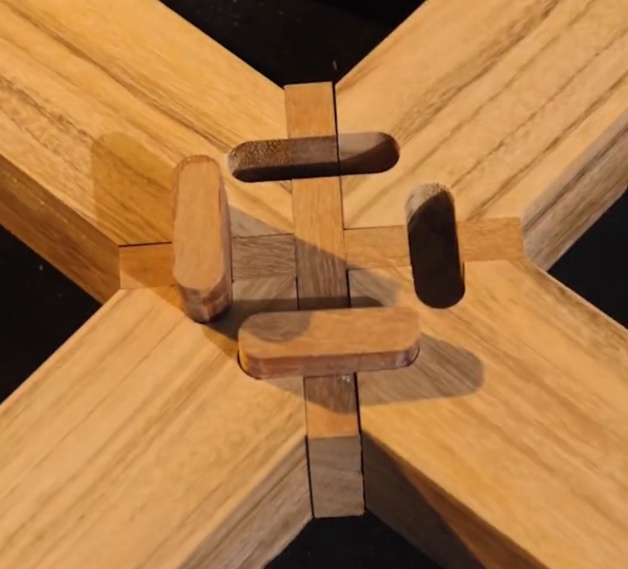
Chinese mortise and tenon is a structural joining method that connects two or more wooden members with interlocking shapes cut directly into the wood, without relying on nails, screws, or modern metal fasteners. One component, the tenon, is a projecting tongue; the corresponding component, the mortise, is a hole, slot, or cavity. When fitted together, they form a tight mechanical connection capable of transmitting loads, resisting movement, and allowing controlled deformation.
In the Chinese context, mortise and tenon is not only a woodworking technique but also a standardized structural system used in architecture, furniture, and ritual objects. It is characterized by modularity, repeatable dimensions, and sophisticated load paths that accommodate both static and dynamic forces, such as the weight of roofs or seismic activity.
Historical Development in China
Wooden joinery in China has a documented history of more than 3,000 years. Archaeological findings from early dynasties show basic tenon structures in chariots, coffins, and building components. Over time, the system became more refined and technically complex.
Early Periods
In pre-Qin and Han periods, simple straight tenons, through-tenons, and dowel-like pegs were commonly used. Structural members in palaces and ancestral halls already relied on timber frames with simple mortise and tenon joints, allowing dismantling and repair.
Systematization and Maturity
By the Song dynasty, technical manuals summarized building standards and joinery methods. Components such as beams, columns, and bracket sets were dimensioned in modular units, and joinery shapes were closely defined. These standards systematized the use of mortise and tenon in large buildings.
In later Ming and Qing periods, classical Chinese furniture reached a high level of precision. Makers used complex concealed and combination joints to achieve clean surfaces and long-term stability even in environments with large humidity variation.
Fundamental Structural Principles
Chinese mortise and tenon joints are based on the interaction of compression, shear, and bending, not on friction alone. The geometry is designed so that external loads compress parts together or lock them into more stable configurations.
- Vertical loads are transferred from upper members to lower members through bearing surfaces at tenon shoulders and mortise bottoms.
- Lateral forces are resisted by interlocking shapes that prevent relative rotation and sliding.
- Moisture movement and dimensional change are accommodated by leaving specific clearances and using wood orientation to minimize splitting.
In many classical buildings, joints are designed to deform slightly under load. This allows frames to dissipate energy instead of cracking. In furniture, joints are sized and oriented to maintain tightness under repeated use while avoiding over-stressing fragile parts.
Key Types of Chinese Mortise and Tenon Joints
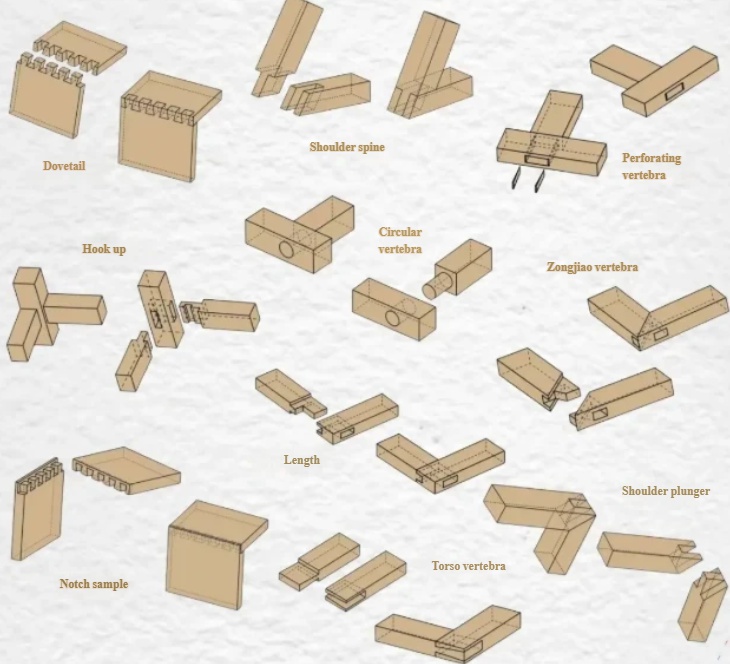
Chinese craftsmen developed a large family of joints, each optimized for particular structural roles, directions of load, and aesthetic requirements. The table below lists representative types and their typical applications.
| Joint Type | Basic Geometry | Main Functions | Typical Applications |
|---|---|---|---|
| Straight (simple) tenon | Rectangular tenon into matching mortise | Basic alignment, vertical load transfer | Frame-and-panel doors, table stretchers |
| Through tenon | Tenon passing completely through member | High strength, easy inspection | Beams into columns, thick frame members |
| Blind (stub) tenon | Tenon engages without penetration to far face | Clean surface, concealed connection | Furniture frames, visible surfaces |
| Haunched tenon | Tenon with additional shoulder or step | Resists twisting, better bearing area | Door rails, wide frames under racking loads |
| Double or twin tenon | Two narrow tenons on same member | Improved resistance to bending and twisting | Wide rails, large table aprons |
| Wedge-tenon joint | Tenon locked by wedge in slot | Adjustable tightness, enhanced mechanical lock | Knock-down frames, bed structures |
| Draw-bored tenon | Offset pin hole pulls joint tight | Self-clamping, improved long-term tightness | Door frames, structural frames |
| Hidden double-shoulder joint | Tenon with shoulders on multiple faces | Controls movement in several directions | High-precision furniture, cabinet corners |
| Tusk tenon (through with key) | Long tenon locked by external key or wedge | Disassemblable yet rigid connection | Large beams, beds, folding structures |
| Sliding dovetail joint | Flared trapezoidal tenon slides into groove | Resists uplift and sideways pull-out | Tabletop fixation, shelf supports |
| Corner mitered mortise and tenon | Mitered corner with hidden tenon inside | Clean corner appearance, structural integrity | Box corners, frames with visible edges |
| Interlocking step joint | Stepped tenons and mortises | High resistance to shear and racking | Table legs to aprons, bracing connections |
Mortise and Tenon in Traditional Chinese Architecture
In Chinese timber-frame architecture, the entire building skeleton is essentially a three-dimensional system of mortise and tenon joints. Columns, beams, purlins, and bracket sets are interlinked with minimal metal connectors. This system is modular and can be dismantled for repair, relocation, or partial replacement.
Primary Structural Components
Key structural elements typically joined by mortise and tenon include:
- Columns and beams: beams rest on or enter columns via tenons, transferring vertical loads.
- Bracket sets: layered brackets, arms, and blocks connect columns to roof purlins, using multiple mortise and tenon interfaces.
- Tie beams and struts: longitudinal and transverse members stabilize the frame, often with through tenons or dovetail forms.
The joints are designed to handle roof load, wind, and seismic forces. Vertical joints allow slight rocking of columns; horizontal members maintain alignment and limit excessive displacement.
Load Paths and Seismic Behavior
The traditional Chinese timber frame relies on:
Compression-based transfer: large bearing surfaces at tenon shoulders and mortise walls spread loads over sufficient area to avoid crushing. Roof loads compress joints, increasing stability.
Energy dissipation: during ground motion, small rotations occur at joints. Controlled clearances and wood elasticity allow frames to absorb energy without catastrophic failure. Many surviving historic structures provide practical evidence of this performance.
Mortise and Tenon in Classical Chinese Furniture
Classical Chinese furniture, especially from the Ming and early Qing periods, is recognized for clean lines, restrained ornament, and considerable structural refinement. Mortise and tenon techniques enable joints that are strong, durable, and visually unobtrusive.
Furniture Categories and Joinery Focus
Common categories include chairs, stools, tables, cabinets, beds, and stands. Each category emphasizes particular joint types:
| Furniture Type | Critical Joint Locations | Typical Joint Types |
|---|---|---|
| Armchairs and stools | Leg-to-seat, stretchers, backrest connections | Through tenons, double tenons, doweled assists |
| Tables and desks | Leg-to-apron, apron-to-top, stretchers | Hidden tenons, sliding dovetails, miter-tenon corners |
| Cabinets and wardrobes | Frame corners, rail-to-stile, door assemblies | Mitered mortise and tenon, blind tenons, panel grooves |
| Beds and couches | Corner frames, long rails, canopy supports | Wedge and tusk tenons, knock-down style joints |
| Screens and lattice | Lattice intersections, frame connections | Half-lap tenons, through tenons, small step joints |
Furniture joints must satisfy several conditions simultaneously: high strength relative to slender members, tolerance of seasonal movement, concealed or minimal visible joinery on primary surfaces, and adequate assembly and disassembly capability for transport and repair.
Material Selection and Wood Properties
The performance of mortise and tenon joints depends heavily on wood species and material condition. Traditional Chinese practice uses hardwoods and softwoods with predictable behavior.
Common Wood Species
Historically, high-grade furniture often used dense hardwoods with fine grain and good dimensional stability, while large structural members in buildings used more readily available softwoods. Key properties considered include:
- Density and hardness: influence bearing strength at joint surfaces and resistance to crushing.
- Dimensional stability: affects gap formation or excessive compression under humidity changes.
- Grain structure: straight, uniform grain reduces risk of splitting at tenon cheeks and mortise walls.
In structural applications, craftsmen orient annual rings and grain direction so that expected expansion and contraction occur away from critical joint surfaces. In furniture, joint dimensions are adjusted to match each species’ shrinkage coefficients.
Geometric Design and Proportioning
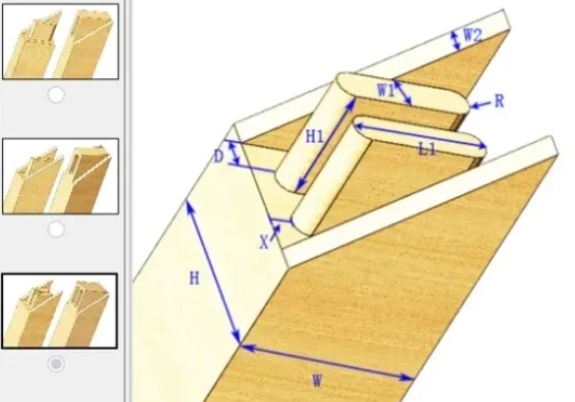
Joint geometry in Chinese mortise and tenon follows proportional rules rather than fixed dimensions, allowing scaling with member size while maintaining adequate strength and stiffness.
Key Dimensional Relationships
Typical design considerations include:
Tenon thickness: generally kept below the full width of the member to preserve cheek strength. For many hardwood furniture parts, tenon thickness commonly falls in the range of one-third to one-half of the member thickness, adjusted for load and wood strength.
Tenon length: for blind tenons, depth is often a fraction of the mating member thickness. Through tenons must extend sufficiently to allow shoulders to bear without splitting the mortised piece.
Shoulder width: shoulders provide crucial bearing surfaces and control alignment. Their size is chosen to resist expected bending and racking forces. Where high lateral loads exist, multiple shoulders on different faces are used.
Clearances: traditional practice leaves minimal but intentional clearance in non-critical directions. Joints are tighter in compression-bearing directions and looser where wood movement is expected. The goal is to maintain tightness over long periods instead of maximum initial friction.
Manufacturing Techniques and Tools
Traditional production of Chinese mortise and tenon joints relied on hand tools and systematic workflows. Accuracy and repeatability were achieved through jigs, gauges, and practiced technique.
Layout and Marking
Craftsmen use reference faces and edges to ensure consistent measurement. Layout steps typically include:
Establishing reference surfaces on each member with a plane, marking centerlines and shoulder lines, and transferring dimensions from one piece to its mate to maintain alignment. Mortises are usually laid out before tenons, and depth gauges or stop marks control cutting depth.
Cutting Mortises
Traditional mortises are made by drilling or chopping a series of holes, then paring to final dimensions. Tools include chisels, mortising chisels, and augers. The craftsman controls wall parallelism and bottom flatness carefully to ensure adequate bearing and avoid stress concentrations.
Cutting Tenons
Tenons are sawn and pared from the end of the member. Maintaining square shoulders and flat cheeks is critical for full contact. For complex joints with multiple steps or shoulders, intermediate checks are made using mating pieces or gauges to prevent cumulative error.
Fitting and Adjustment
Fitting typically follows a gradual approach: initial assembly shows where the contact is too tight or uneven, and localized paring corrects these areas. Over-tightening is avoided, as it can induce splits or long-term stress. The objective is a firm slide fit achievable with moderate force.
Assembly, Disassembly and Maintenance
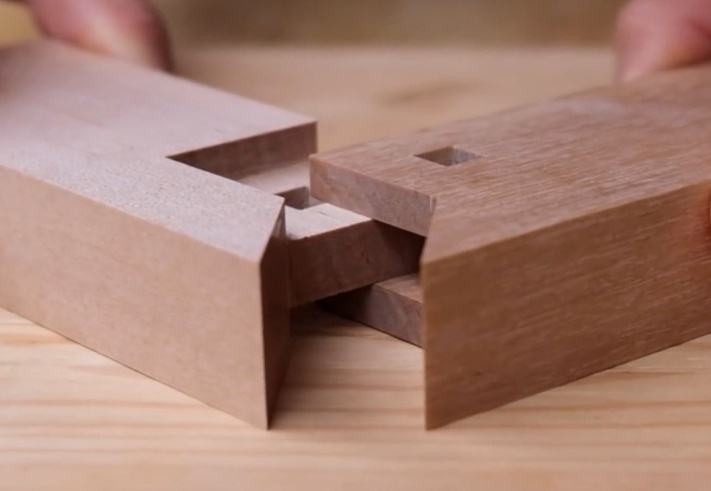
One distinctive feature of Chinese mortise and tenon systems is the possibility of partial or complete disassembly. This applies both to buildings and to many furniture pieces.
Assembly Sequence
In buildings, assembly generally begins with columns and main beams, followed by secondary beams, purlins, and bracket sets. The sequence is chosen so gravity and temporary supports can assist positioning. In furniture, legs and frames are often assembled first, with panels and secondary elements installed subsequently, using sliding dovetails or small tenons.
Disassembly and Replacement
When components decay or are damaged, they can often be removed by reversing the assembly sequence. Wedges or keys are extracted, and tenons are tapped free along their insertion direction. New members are fabricated to the same dimensions and installed without altering the remaining structure.
This modularity contributes to long service life. Routine maintenance focuses on monitoring joint tightness, checking for gaps indicating shrinkage or decay, and observing any misalignment that might show differential settlement or moisture problems.
Technical Advantages and Limitations
Chinese mortise and tenon provides a combination of mechanical performance, reparability, and design flexibility suited to wood’s natural properties.
Advantages
- Efficient load transfer using axial compression and shear rather than reliance on metal fasteners.
- Compatibility with wood movement: joints are designed to accept limited deformation without failure.
- High reparability: components can be replaced individually with minimal disturbance to the whole structure.
- Minimal surface damage: concealed joints keep visible faces clean, especially in furniture.
Limitations and Considerations
Producing high-quality joints requires precise workmanship and appropriate material selection. Dimensional errors or unsuitable grain orientation can cause splitting at mortise walls or tenon cheeks. Overly tight fits can lead to long-term stress, while loose fits reduce stiffness and may accelerate wear. In very large spans or high-load conditions, supplementary methods or increased member size are often necessary to maintain adequate safety margins.
Guidelines for Modern Practice
For contemporary designers, builders, and woodworkers applying Chinese mortise and tenon principles, several practical guidelines help ensure reliable outcomes.
Design Considerations
Joint selection should match the load type (tension, compression, shear), direction of anticipated forces, and the importance of future disassembly. Geometry must respect minimum edge distances to avoid splitting: mortises should not be placed too close to member edges, and sufficient material must remain between adjacent joints. Where members are slender, double or haunched tenons distribute stress more evenly.
Moisture and Environment
Wood moisture content at the time of fabrication should be controlled and compatible with the expected service environment. In climates with large humidity variation, joint clearances and bearing areas must be adjusted to avoid permanent gaps or crushing. In outdoor structures, protective measures against water infiltration at joints are important, as end grain and mortise cavities are susceptible to moisture-related degradation.
Conclusion
Chinese mortise and tenon is a comprehensive structural system based on carefully shaped interlocking wooden joints. It integrates material properties, geometric design, and standardized construction procedures to produce durable buildings and furniture that can be assembled, used, maintained, and repaired over long periods. Understanding the technical principles behind these joints allows modern practitioners to design and build timber structures that fully exploit wood’s capabilities while respecting proven traditional methods.