Overview and Historical Context
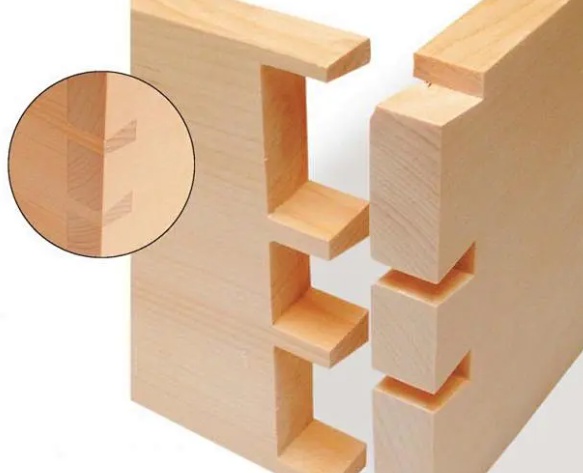
Chinese mortise and tenon joinery and Western wood joints represent two mature systems for connecting wooden components without relying primarily on modern fasteners. Both traditions reached high levels of refinement, yet they evolved under different architectural, climatic, and material conditions, which shaped the geometry, complexity, and performance of their joints.
Chinese joinery is strongly associated with classical timber architecture, bracket sets (dougong), and refined Ming and Qing dynasty furniture. Its system emphasizes concealed joints, multi-directional load transfer, and disassembly. Western joinery evolved in parallel within timber framing, cabinetry, and later machine-based production, focusing on direct load paths, repeatability, and compatibility with metal fasteners and adhesives.
Understanding their differences requires looking at structural mechanics, typical joint families, dimensional parameters, load performance, and fabrication processes rather than limiting the comparison to visual style.
Structural Principles and Load Transfer
Both systems use mortise (recess) and tenon (projection) as fundamental components, but their structural logic differs in emphasis.
Chinese joinery structural logic
- Joints often work as integrated assemblies distributing loads across multiple contact surfaces instead of single-plane bearing.
- Components are frequently locked by interlocking shoulders, stepped tenons, and draw-in geometries, providing resistance to rotation without metal hardware.
- In large timber structures, joints are designed to accommodate movement from humidity and seismic activity. Controlled looseness (working clearance) is sometimes used at non-critical interfaces.
Vertical loads from roofs or upper frames can pass through a chain of brackets, arms, and struts. Each element is keyed or notched into another using mortises, tenons, dovetail-like tongues, and blind joints that resist sliding under compression while allowing controlled deformation under lateral loads.
Western joinery structural logic
- Joints commonly follow clear, short load paths: vertical loads go through posts and beams via direct bearing; lateral loads are resisted by braces, pegs, or supplemental hardware.
- Mortise and tenon joints are often dimensioned to maximize strength in a single dominant direction, with additional bracing for secondary forces.
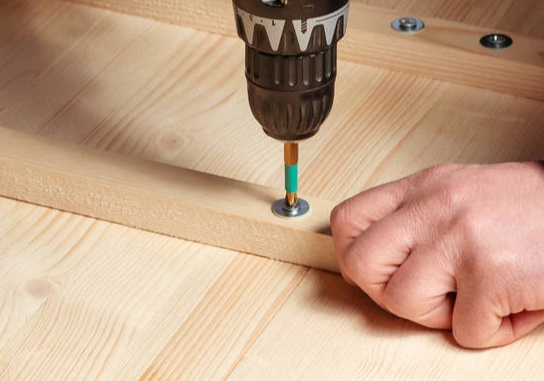
- Modern Western practice frequently combines traditional joints with screws, bolts, dowels, or adhesives to increase stiffness and reduce fabrication complexity.
In Western timber framing, a through mortise and tenon with pegs can handle heavy axial and bending loads. In cabinet and furniture work, joints like dovetails and box joints provide strong resistance to tension and racking forces, often supplemented by glue.
Key Joint Types in Chinese Mortise and Tenon Joinery
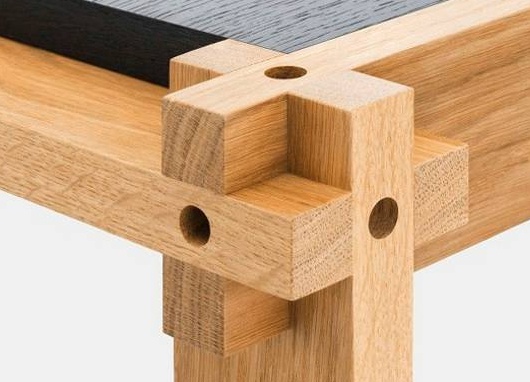
Chinese joinery includes a large catalog of joints tailored for specific stress states and locations. Many are specialized variants of mortise and tenon, dovetail, and housed joints with internal locks.
Mortise and tenon variants
Typical families include:
- Straight through tenon: Tenon passes fully through the member; sometimes wedged or stepped internally.
- Blind tenon: Tenon ends within the mortise; external surfaces remain visually continuous.
- Stepped or shouldered tenon: Multiple shoulders on one or more sides resist rotation and provide precise registration.
Dimensions vary according to member size and load. In Ming furniture, tenon thickness often ranges around 1/3 of the member thickness, and tenon length can range from approximately 0.6 to 1.0 times the member width depending on material strength and the presence of multiple tenons in one member.
Interlocking and self-locking joints
Chinese practice makes extensive use of locked joints where parts cannot separate without a defined sequence of disassembly. Examples include:
Sliding dovetail-like tenons: Tenons taper slightly, fitting into corresponding tapered mortises. Once other components are in place, withdrawal is blocked. This provides resistance against both tension and shear without visible hardware.
Hooked and shouldered joints: Tenons incorporate hooks, undercuts, or internal ledges that catch corresponding features in the mortise. These features stop both translation and rotation under service loads. Internal locks may be entirely invisible from the exterior surfaces.
Bracket and frame joints in architecture
Traditional Chinese timber buildings use complex frame-and-bracket systems.
Key features:
- Column-to-beam connections via tenons, bearing shoulders, and sometimes double-tenon arrangements to spread stress.
- Bracket arms (gong) and block sets (dou) that interlock through notched and tenoned interfaces, taking vertical and horizontal loads while allowing slight rocking.
- Roof purlin seating in notched or half-lap-like joints that control sliding and rotation.
Dimensions in structural work are determined by proportional rules based on the column diameter or beam depth, codified historically in building manuals. Joint lengths and shoulders are sized to keep fiber stresses within allowable limits for species such as Chinese fir or pine.
Furniture joints
Chinese furniture of the Ming and Qing periods is an advanced demonstration of mortise and tenon design. Common joints include:
Frame-and-panel joints: Stiles and rails are connected with tenons that also capture floating panels. Panel grooves allow for seasonal movement without splitting.
Corner and leg joints: Complex leg-to-apron joints often combine double tenons, haunched tenons, and internal cross wedges. These compound assemblies resist racking when chairs or tables are subject to lateral loads.
Stretcher and rail joints: Horizontal members connecting legs often use housed mortise and tenon or half-lapped tenons to ensure alignment and distribute stress.
Key Joint Types in Western Woodworking
Western joints cover structural timber frames, doors and windows, cabinetry, and furniture. The system is diverse but more standardized around a smaller set of commonly taught joint types.
Mortise and tenon in Western practice
Like in China, the mortise and tenon is the primary structural joint. Common variants include:
- Through mortise and tenon: Tenon visible on the far side, often wedged from the outside to flare the tenon.
- Blind and stub tenons: Tenon ends within the mortise, used when aesthetics or material thickness restrict through joints.
- Haunched tenons: Extra shoulder (haunch) fills a groove or rebate to prevent twisting and to preserve the full width of the mating member.
Dimensions in Western carpentry and furniture often follow rules of thumb, for example: tenon thickness around 1/3 of the thickness of the material, tenon length approximately 4 to 5 times the tenon thickness for moderate loads, with adjustments for species and load conditions.
Dovetails and mechanical tension joints
Dovetail joints are prominent in Western furniture and cabinetry:
Through dovetail: Used in carcasses and boxes; tails and pins lock against pulling apart in one direction. The slope (angle) of the dovetail commonly ranges from 1:6 to 1:8 (rise:run) depending on wood hardness.
Half-blind dovetail: Used for drawer fronts to conceal the joint from the front while still providing mechanical resistance to pulling forces during drawer operation.
Sliding dovetail: Used to join shelves to carcass sides or structural members to posts; combines housing and dovetail geometry to resist withdrawal.
Frame, panel, and casework joints
Western joinery also uses:
Frame-and-panel joints: Rails and stiles joined by mortise and tenon, often with floating panels captured in grooves to accommodate wood movement.
Box joints (finger joints): Interlocking rectangular fingers provide large glue surface and are suited to machine production.
Mitered joints with reinforcement: Miters reinforced with splines, biscuits, or loose tenons to improve strength and alignment.
Timber framing joints
In structural timber framing, Western joints include:
Shouldered beam-to-post tenons: Shoulders provide bearing, pegs or draw-boring lock the joint and pre-load it against movement.
Braces with housed tenons: Short diagonal braces fit into shallow housings and tenons to resist racking and lateral loads.
Scarfs: Longitudinal joints that connect shorter timbers end-to-end, sometimes keyed and pegged, used when single-piece timbers of required length are unavailable.
Comparative Table of Typical Joint Types
| Aspect | Chinese Mortise and Tenon Joinery | Western Wood Joints |
|---|---|---|
| Primary structural joint | Multiple mortise and tenon variants, often blind and internally locked | Through or blind mortise and tenon, frequently pegged or glued |
| Typical visible corner joint in fine furniture | Complex concealed mortise and tenon; external surfaces largely continuous | Dovetail (through or half-blind), sometimes box joint |
| Architectural framing | Bracket sets, notched beams, stepped and double tenons, multi-part assemblies | Post-and-beam with shouldered tenons, braces, scarf joints |
| Disassembly and repair | Many joints engineered for reversible assembly with wooden keys and sequences | Traditional joints often permanent once glued; some frames still pegged and disassemblable |
| Use of metal fasteners | Originally minimal; wood-only locking relied upon | Broad use of nails, screws, bolts, and later mechanical connectors |
| Typical decorative emphasis | Clean surfaces, emphasis on wood grain continuity, joints hidden | Joints sometimes expressed (e.g., visible dovetails) as a sign of workmanship |
Dimensional Parameters and Proportions
While local practices vary, several proportional rules and dimensional considerations commonly influence both Chinese and Western joints.
Tenon thickness and length
In both traditions, tenon thickness is often around one-third of the member thickness for standard hardwood joinery. Reducing thickness lowers strength; increasing thickness risks weakening the mortised member.
Tenon length is chosen based on bending moment and withdrawal demands. In furniture-scale components, length commonly ranges from 0.6 to 1.0 times the width of the mortised member. For heavily loaded structural members, tenons can be longer or supported by shoulders bearing directly against mating surfaces.
Shoulders and bearing surfaces
Shoulders control alignment and transfer compression. Chinese joinery frequently uses multi-shoulder arrangements, including stepped shoulders in two or three directions. Western practice also uses four-shouldered tenons in critical joints but less often with internal steps.
Bearing width should be sufficient to keep compression stress within the capacity of the species used. Hardwoods like rosewood, oak, or beech allow narrower shoulders than softwoods, but excessive compression can still cause crushing and long-term looseness.
Clearances and fit
Fit characteristics differ somewhat between traditions.
Chinese joints: In structural architecture, some interfaces intentionally allow small clearances for assembly and movement. Critical locking surfaces are tighter. Furniture-level joints are typically very precise, often requiring gentle mallet pressure but still allowing disassembly without damage if done correctly.
Western joints: Many are designed for strong adhesive bonds. When glue is central to performance, slightly looser fits with controlled glue lines are acceptable. In pegged timber framing, draw-bored pegs introduce preload that compensates for minor clearances.
Materials and Wood Species Considerations
Material choice has a direct impact on joint design, especially for long-term stability and resistance to splitting under stress.
Chinese practice
Historic Chinese joinery often used dense hardwoods for furniture (for example huanghuali, zitan, or northern hardwoods) and conifers such as cypress and fir for architecture. Characteristics relevant to joinery include:
High density hardwoods: Allow fine, delicate tenons with thin walls between adjacent mortises. However, they are more brittle, so sharp internal corners or sudden changes in section must be minimized.
Softwoods in architecture: Offer good strength-to-weight ratio but lower surface hardness. Joints are dimensioned larger, with more generous bearing and shoulder areas, to avoid crushing.
Western practice
Western joints have been developed for a broad range of species: softwoods like pine and spruce, and hardwoods like oak, ash, maple, walnut, and beech.
Softwoods: Require larger tenons and broader shoulders for equivalent load capacity. They also benefit from reinforcing elements (pegs or metal hardware) in high-stress locations.
Hardwoods: Allow finer joinery; dovetails and small tenons can still provide high strength if grain direction and loading are favorable.
Tools and Fabrication Methods
Tooling strongly influences the geometry and repeatability of joints.
Hand tools in Chinese joinery
Traditional Chinese joiners relied on hand saws, chisels, ink lines, and specialized layout tools. Complex internal locks and stepped tenons were cut by hand and fitted gradually. The emphasis was on precision layout and controlled removal of material.
Jigs and templates were sometimes used for repetitive elements in architectural components. Because joints might need to be disassembled for transport or maintenance, high dimensional consistency was important for interchangeability within a single structure or furniture set.
Hand and machine tools in Western joinery
Western carpenters and cabinetmakers used comparable hand tools but were early adopters of machines such as mortisers, tenoners, routers, and table saws. This influenced joint selection.
Machine-based joints: Box joints, loose tenons, and certain forms of dowel joinery are particularly compatible with machines, allowing fast, repeatable production. Mortise and tenon joints can be formed rapidly with dedicated machines.
Hand-cut fine joinery: Dovetails, angled tenons, and complex braces are still commonly executed by hand in high-end work, with layout optimized for mechanical strength rather than for compatibility with standardized tooling.
Disassembly, Maintenance, and Service Life
The approach to disassembly and maintenance is a major point of difference between the systems.
Chinese reversible assembly
Many traditional Chinese structures and furniture pieces are designed so that major components can be disassembled without destroying the joints. This is possible because locking is achieved with geometric interlocks rather than permanent adhesives or extensive metal hardware.
Advantages include:
- Ease of transport: Large architectural frames or furniture pieces can be dismantled into smaller elements.
- Repairability: Damaged components can be replaced without cutting new joints into existing members.
- Adjustability: Joints can be re-fitted if seasonal movement or wear leads to looseness.
Western semi-permanent assembly
In many Western applications, joints are intended to remain assembled for the service life of the product. Glue, pegs, and metal fasteners are common. While some timber frames can be disassembled, glued furniture joints typically cannot.
This approach suits mass production and reduces the time spent on finely tuned mechanical interlocks, but it limits the scope for non-destructive repair and long-term adaptation.
Performance, Strength, and Failure Modes
When comparing performance, it is useful to consider how joints behave under predictable loading and how they fail when overloaded or poorly executed.
Load-bearing performance
Chinese joints: Strength arises from distributed bearing surfaces, interlocking geometry, and the combined action of multiple joints within a frame. In architecture, bracket systems distribute loads across several members, avoiding singular high-stress points.
Western joints: Performance often relies on well-dimensioned mortise and tenon, dovetail, or scarf joints, sometimes supplemented with glue and metal connectors. Load paths are often more direct: beams bear on posts; braces handle racking loads; panel joints primarily carry in-plane forces.
Typical failure modes
Common issues include:
Splitting at mortise walls: Occurs if the tenon is too thick or if grain orientation and shrinkage forces are unfavorable.
Crushing at shoulders: Excessive compression at bearing surfaces in heavily loaded joints can cause long-term deformation.
Loosening due to shrinkage and wear: Seasonal movement and repetitive loading can enlarge contact areas and reduce friction, making joints loose if not properly designed or maintained.
In Chinese reversible joints, maintenance and re-fitting can mitigate some of these effects. In glued Western joints, failure may require partial reconstruction or replacement of components.
Application Scenarios and Suitability
Choosing between Chinese-style mortise and tenon systems and Western joints depends on project type, fabrication resources, and lifecycle expectations.
Architectural and structural uses
Chinese system: Particularly well suited to large timber frames where multi-directional loads and seismic effects must be managed. Bracketed frames and interlocking joints are effective when long-term disassembly and repair are important and when design follows established proportional rules.
Western system: Effective for straightforward post-and-beam construction, especially where modern metal connectors are acceptable or required by code. Through tenons with pegs, scarf joints, and braced frames are efficient for modern timber framing workflows.
Furniture and interior joinery
Chinese mortise and tenon furniture: Offers clean aesthetics with concealed joints, efficient use of hardwood strength, and potential for disassembly. Fabrication requires high skill, precise layout, and familiarity with complex joint sequences.
Western furniture joinery: Dovetails, mortise and tenon, and modern mechanical joints (like biscuits and loose tenons) support both high-end bespoke work and industrial production. Designers can choose between visibly expressive joints and hidden ones depending on the project.
Design and Planning Considerations
When integrating either system, careful planning is required to align joint selection with functional and structural requirements.
Key considerations
Load type and direction: Identify compressive, tensile, shear, and racking forces and choose joints that resist the dominant loads mechanically, not only through friction or adhesives.
Wood movement: Both systems must respect tangential and radial shrinkage and expansion. Floating panels, haunches, expansion gaps, and selective clearances are necessary to prevent cracking.
Assembly sequence: Complex Chinese joints often require a precise assembly order. Western joinery also demands planning so that glue-ups are manageable and accessible for clamping or pegging.
Tooling and skill level: Some joints are impractical without particular tools or experience. Highly interlocked Chinese joints may not be economical for small workshops, while certain Western machine-based joints may be inefficient when only hand tools are available.
Summary of Core Differences
| Feature | Chinese Mortise and Tenon Joinery | Western Wood Joints |
|---|---|---|
| Primary mechanism | Geometric interlocking, multiple mortise and tenon variants, reversible assembly | Combination of mechanical geometry with adhesives and fasteners |
| Visual treatment of joints | Generally concealed, surfaces appear continuous | Often highlighted (e.g., dovetails) or simplified for production |
| Structural emphasis | Distributed load sharing through bracketed assemblies and multi-part joints | Direct load paths through posts, beams, braces, and panels |
| Maintenance approach | Designed to allow disassembly, component replacement, and re-fitting | Often semi-permanent; repairs may require cutting or replacing joints |
| Typical areas of application | Classical timber buildings, bracket systems, high-end hardwood furniture | Timber framing, cabinetry, furniture, and industrial wood products |
Conclusion
Chinese mortise and tenon joinery and Western wood joints are both technically sophisticated frameworks for connecting wood components. Their differences lie less in the basic mortise and tenon concept and more in how they use that concept to manage loads, movement, assembly, and longevity.
Chinese practice emphasizes internal locking geometries, reversible assembly, and multi-directional load distribution in both architecture and furniture. Western practice emphasizes direct structural paths, compatibility with adhesives and modern hardware, and flexible integration into both hand and machine-based production.
For woodworkers, designers, and engineers, understanding both systems expands the range of options available for structural performance, aesthetic outcomes, and lifecycle planning in wooden structures and objects.