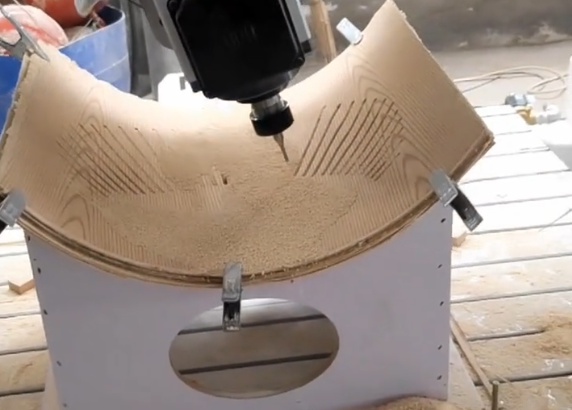
Overview of CNC Engraving Services
CNC engraving services use computer-controlled cutting tools to machine permanent marks, text, logos, patterns, and functional features into the surface of a workpiece. The process is based on subtractive manufacturing and typically uses a CNC milling or routing machine equipped with small-diameter engraving tools. Compared with manual engraving, CNC engraving offers reproducible accuracy, high repeatability, and efficient processing for both prototypes and production batches.
CNC engraving is applied to metals, plastics, composites, and other rigid materials. It is widely used for part identification, branding, decorative finishes, functional markings, and micro-scale features in industrial, commercial, and consumer products. Service providers support a broad range of part sizes, engraving depths, and levels of detail by configuring spindle speed, feed rate, tool type, and machining strategies.
Core Capabilities of CNC Engraving
CNC engraving systems provide a wide spectrum of technical capabilities, from shallow surface marking to deep 3D relief. The performance of a given service depends on machine rigidity, spindle power, motion control resolution, tooling, and fixturing quality.
Engraving Depth and Resolution
Engraving depth can range from light surface marking to deep cuts for permanent identification or functional grooves. Typical service ranges include:
- Shallow cosmetic marking: depth approx. 0.02–0.10 mm, suitable for fine text and logos.
- Standard identification: depth approx. 0.10–0.50 mm, suitable for serial numbers and nameplates.
- Deep engraving: depth approx. 0.50–3.00 mm or more, depending on material and tool size.
Resolution is mainly governed by machine positioning accuracy and tool diameter. Common positioning accuracies for industrial CNC engraving equipment are within ±0.01–0.05 mm, while high-precision machines can reach ±0.005 mm or better for small work envelopes. Minimum line width typically corresponds to tool tip diameter, often in the range of 0.10–0.50 mm for general-purpose services and smaller for micro engraving.
Supported Materials
Many CNC engraving service providers support multiple material categories. The machinability and achievable detail depend on hardness, toughness, and thermal behavior of the workpiece.
| Material Category | Typical Subtypes | Engraving Characteristics |
|---|---|---|
| Aluminum | 6061, 6082, 7075, cast aluminum alloys | Good machinability, suitable for both shallow and deep engraving, smooth surface finish, ideal for nameplates, panels, and mechanical components. |
| Steels | Mild steel, carbon steel, alloy steel, tool steel (pre-hardened) | Requires rigid machines and appropriate tooling; depth and feed rate are limited by hardness; delivers robust, wear-resistant engravings. |
| Stainless Steel | 304, 316, 17-4PH | More demanding to machine; lower feed rates and optimized cooling required; suitable for harsh environments and sanitary applications. |
| Copper Alloys | Brass, bronze, copper | Good detail reproduction; may require optimized chip evacuation; often used for plaques, decorative components, electrical devices. |
| Plastics | ABS, acrylic (PMMA), polycarbonate, POM, PVC, HDPE | Low cutting forces; high spindle speeds and sharp tools preferred; suitable for illuminated panels, signage, and enclosures. |
| Composites | FR4, carbon fiber laminates | Requires suitable tool geometry and dust management; used for control panels, electronic boards, and structural components. |
| Wood and Engineered Wood | Hardwood, softwood, MDF, plywood | Common in routing-style engraving; supports deep and wide engravings for panels and decorative elements. |
2D, 2.5D, and 3D Engraving
CNC engraving can be categorized into 2D, 2.5D, and 3D, depending on how toolpaths are programmed and executed:
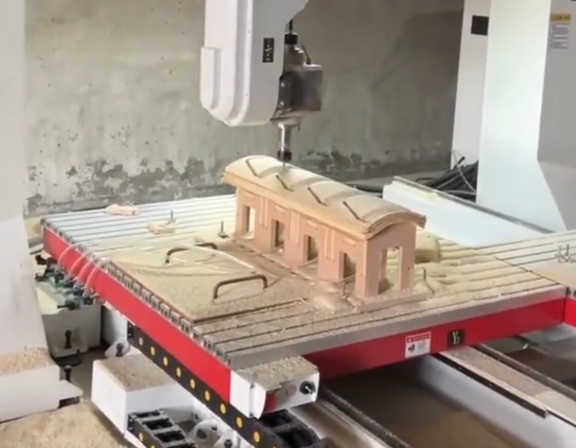
2D engraving follows a constant depth along the toolpath, typically used for text, basic logos, and simple shapes. The cutter stays at a fixed Z-level while tracing a 2D profile. 2.5D engraving uses different depth levels for different regions but still treats each region as having uniform depth; it is common for stepped patterns, filled shapes, and layered markings. 3D engraving continuously varies the Z-depth along toolpaths to create contoured surfaces, reliefs, and complex topography.
Machine Envelope and Part Size
The size of parts that can be engraved is limited by machine travel in X, Y, and Z axes as well as fixturing possibilities. Typical job size ranges found in CNC engraving services include small components (less than 50 mm in each dimension) for electronics and micro-mechanics, medium parts (50–500 mm) for plates, panels, and housings, and large items (over 500 mm) such as machine fronts, signage, and architectural elements. Some routers and gantry-style machines support engraving of panels larger than 2000 mm in length, provided sufficient rigidity and stability.
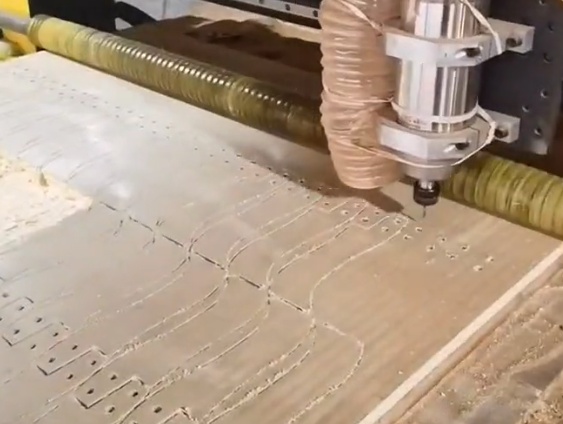
Technical Parameters and Process Control
The quality and consistency of CNC engraving depend on a set of controllable parameters and process settings. Proper parameter selection is essential for balancing precision, surface finish, cycle time, and tool life.
Tooling and Cutter Geometry
Engraving tools are usually small-diameter cutters with geometries adapted to fine features. Common tool types include:
- V-bit cutters (e.g., 15°, 30°, 45°, 60°, 90°) for sharp, tapered lines and variable-width text.
- Flat end mills (e.g., 0.2–2.0 mm diameter) for uniform-width grooves and pockets.
- Ball nose end mills for 3D reliefs and contoured surfaces.
Tool material is often solid carbide, providing high hardness and wear resistance for metals and composites. Coatings such as TiAlN or TiN may be used on tools to reduce wear, improve chip evacuation, and support higher temperatures. The selection of tool diameter, included angle, and edge preparation is closely tied to desired line width, depth, and material properties.
Spindle Speed, Feed Rate, and Depth of Cut
Engraving operations generally use high spindle speeds and relatively low cutting forces. Key parameters include spindle speed (rpm), feed rate (mm/min or mm/s), and depth of cut (mm per pass). High-speed spindles (e.g., 20,000–60,000 rpm for small tools) are common for fine detail, particularly in aluminum and plastics. Feed rates must be adjusted to maintain chip load within tool manufacturer recommendations, preventing excessive tool wear or poor surface quality. Depth of cut is normally small for engraving, especially when using very thin tools, to reduce tool deflection and breakage risk.
Tolerances and Dimensional Accuracy
Dimensional tolerances for CNC engraving depend on machine calibration, stiffness, tooling, and thermal conditions. Service providers commonly state achievable positional tolerances in the range of ±0.02–0.10 mm for standard engraving work. For precision applications, tolerances as tight as ±0.01 mm or better may be offered on suitable equipment, with corresponding limitations in part size and material. Tolerance capability should be matched to the application, for example, tight tolerances for functional grooves or reference marks, and more relaxed tolerances for decorative patterns.
Surface Finish and Edge Quality
Surface finish is influenced by feed rate, tool geometry, depth of cut, and material. For metal engraving, fine tools and optimized feed results in smooth surfaces with visible but small tool marks. Plastics and softer metals typically achieve smoother engravings due to lower cutting resistance. Edge quality is impacted by burr formation in metals and potential chipping in brittle materials. Deburring and secondary finishing can be used when required, particularly for safety-critical components or parts that will be handled frequently.
Typical Services Offered by CNC Engraving Providers
CNC engraving companies usually provide a set of standardized and custom services that address identification, branding, functional features, and decorative applications across multiple industries.
Text, Serial Number, and Code Engraving
Text engraving includes characters, part names, and technical information on plates or directly on components. Serial numbers, batch codes, and alphanumeric identifiers can be engraved in a consistent font and size across multiple parts. Many providers also support engraving of barcodes and 2D codes such as Data Matrix or QR code, using patterns of engraved and non-engraved regions that can be read by machine vision systems.
Logo, Symbol, and Graphic Engraving
Logo and symbol engraving is used for branding of equipment housings, nameplates, instruments, and consumer products. Graphical elements can be reproduced in line art form or as filled areas with varying depths. For industrial products, engraving offers a permanent alternative to printing, maintaining legibility under harsh environmental conditions, abrasion, and chemical exposure.
Nameplates, Panels, and Control Interfaces
Many CNC engraving services specialize in industrial nameplates, control panels, and front plates for machinery, electrical cabinets, and instrumentation. In such applications, text and symbols often follow standards for readability and safety. Engraving can be combined with color filling of grooves to improve visibility. Common solutions include anodized aluminum plates with engraved and color-filled markings, plastic laminate panels with engraved text revealing contrasting layers, and stainless-steel nameplates for demanding environments.
Functional Markings and Features
Beyond decorative and informational content, CNC engraving supports functional markings. Examples include scale markings, reference lines, alignment marks, index notches, textured surfaces for grip or friction control, and shallow grooves for routing wires or retaining adhesives. In some cases, engraved channels can serve as microfluidic paths, lubrication grooves, or flow indicators, assuming appropriate design and process control.
Deep and Micro Engraving
Deep engraving provides high durability and legibility when surfaces may be worn or re-finished during the product life cycle. This is common in tooling, molds, and parts exposed to abrasion. Achieving consistent deep engravings requires multi-pass strategies, careful heat management, and robust fixturing.
Micro engraving focuses on fine details and small characters, often below 1 mm height. It is used for high-density marking, anti-tamper identifiers, and micro-logos. Tools with very small tip diameters and high-speed spindles are typical in this domain. Service providers may specify minimum character height or line width achievable in each material.
Benefits of CNC Engraving for Industrial and Commercial Use
CNC engraving offers several technical and operational advantages compared with many other marking and decorating methods.
Precision and Consistency
Computer-controlled toolpaths allow precise reproduction of design data, including complex fonts, symbols, and contours. Each part can match the original CAD or vector artwork closely, provided tolerances are compatible with the process. This precision is critical for control scales, graduated dials, and components where marks serve as functional references.
Durability and Permanence
Engraving removes material to create physical features rather than adding a surface layer. As a result, markings remain visible after moderate wear, exposure to chemicals, or surface cleaning. On metals and hard plastics, engraving provides long-term legibility in applications such as industrial equipment, outdoor installations, and safety-critical components.
Design Flexibility and Customization
CNC engraving workflows accept a wide range of design formats and content. Text size, font, spacing, and layout can be adjusted quickly in the CAM or engraving software. Logos, serial number formats, and variable data can be modified without major tooling changes. This flexibility supports low-volume customized production, variant markings for different markets, and quick adaptation of products to new regulations or identification requirements.
Compatibility with Existing CNC Machining
When parts are already produced on CNC machines, engraving can be integrated into the same setup or a subsequent operation. This reduces the need for additional processes like stamping or printing, and helps maintain positional accuracy between engraved elements and machined features. Shared fixtures and common reference datums further simplify production flow.
Material Versatility
CNC engraving methods are adaptable to many substrates without major changes to equipment. By selecting suitable tools and parameters, the same service provider can process metals, plastics, wood, and composites. This enables consistent marking solutions across diverse product families and materials within a single supply chain.
Use Cases and Industry Applications
CNC engraving is used in numerous sectors where reliable, precise, and permanent markings or surface features are required. It supports both functional and aesthetic purposes across varied product types.
Manufacturing and Mechanical Engineering
In mechanical and industrial equipment, CNC engraving is applied to machine plates, motor housings, gearboxes, and structural parts. Typical examples are engraved part numbers, maintenance instructions, directional arrows, grease points, and calibration marks. Tooling components such as injection molds, dies, and fixtures may be engraved with cavity identifiers, date wheels, and positioning references.
Electronics and Electrical Equipment
Electronics manufacturers use CNC engraving for front panels, switch plates, junction boxes, and rack equipment. Symbols for switches, connectors, and indicators are engraved to ensure long-term readability. On electrical distribution boards and control cabinets, engraved labels and tags provide durable identification of circuits, breaker positions, and safety information.
Aerospace, Defense, and Transportation
In aerospace and defense sectors, permanent engraving is often used for traceability, compliance, and safety-critical identification. Serial numbers, part codes, and inspection marks are engraved on structural components, brackets, and housings. Transportation-related products, such as rail equipment, marine hardware, and automotive aftermarket parts, also use engraved markings for durability under vibration, humidity, and mechanical wear.
Medical Devices and Laboratory Equipment
Medical device and laboratory equipment manufacturers rely on engraving for identification and labeling that withstands cleaning and sterilization. Stainless-steel instruments, surgical trays, and laboratory fixtures frequently carry engraved codes and text. In some cases, small engraved features serve functional roles in fluid handling, positioning, or device assembly.
Signage, Branding, and Commercial Products
Commercial and retail products use CNC engraving for logos, decorative patterns, and personalized text on items such as giftware, trophies, awards, corporate gifts, and customized consumer goods. Architectural signage, building plaques, and wayfinding signs often combine engraved lettering with colored infills for high visibility and weather resistance.
File Preparation and Design Guidelines
Proper file preparation improves the efficiency and quality of CNC engraving services. Design guidelines help ensure that artwork and part models can be translated into machine-executable toolpaths without ambiguity.
Accepted File Formats
Service providers generally support a combination of CAD and vector artwork formats. Common file types include:
- CAD formats such as STEP, IGES, and DXF for geometry and part models.
- Vector formats such as SVG, AI, and EPS for logos and graphic elements.
- Drawing formats such as DWG for annotated engineering drawings.
For pure text-based engraving on supplied hardware, providers may also accept written text specifications combined with font choices, size, and layout instructions, which they then convert into engraving toolpaths.
Minimum Feature Size and Font Selection
When preparing artwork, minimum line width, character height, and spacing must be considered. These depend on tool diameter and machine capabilities. Service providers frequently specify minimum character height (for example, 1.0–2.0 mm for general work in metals) and minimum stroke width. Fonts with uniform stroke thickness and sufficient open space between lines tend to engrave more reliably than extremely thin or decorative fonts.
Vector artwork should avoid extremely small details that cannot be reproduced with available tool sizes. If small features are required, they should be validated against the provider’s stated minimums for each material and depth.
Depth Specification and Layer Management
Designers should clearly specify engraving depths, particularly when multiple depths exist in a single design. This can be done via CAD model features or, in vector files, via color-coded layers or line attributes tied to depth instructions. Clear documentation reduces the risk of misinterpretation, especially when combining text, logos, and functional grooves on the same part.
CNC Engraving Process Flow
CNC engraving services follow a defined workflow from initial request to finished parts. Understanding this process helps in planning lead time and technical communication.
Inquiry, Quotation, and DFM Review
The process begins with submission of drawings, 3D models, artwork, and technical requirements. The service provider reviews the data for feasibility, material compatibility, feature sizes, and tolerance demands. A quotation is then prepared, including cost, lead time, and any recommended design adjustments. At this stage, manufacturability considerations such as tool access, fixture points, and minimum engraving depth are evaluated.
CAM Programming and Toolpath Generation
Once the order is confirmed, CAM engineers import the data into engraving or CAM software. Toolpaths are created according to depth, width, and detail requirements. Parameters such as tool selection, spindle speed, feed rate, and step-over are defined. Simulation tools are commonly used to verify toolpath behavior, detect collisions, and check whether the engraved content matches the design.
Setup, Fixturing, and Machining
In the machining stage, the workpiece is clamped or fixtured on the CNC machine. Proper fixturing ensures that engraving positions are consistent from part to part and that vibration is minimized. The machine is then referenced and zero points are set according to the CAM program. Engraving operations are executed automatically following the programmed sequence, which may include multiple tools and depth levels.
Inspection, Finishing, and Delivery
After machining, engraved parts undergo inspection. Visual checks confirm that all required content is present, legible, and correctly positioned. Dimensional checks may be performed for critical features. If specified, deburring, cleaning, and additional finishing processes such as anodizing, painting, or color filling are applied. Finished parts are then packaged and shipped according to customer requirements.
Considerations and Common Issues in CNC Engraving
Successful CNC engraving requires attention to several practical considerations. Ignoring these aspects can result in suboptimal quality, increased cost, or extended lead times.
Material and Hardness Constraints
Very hard or abrasive materials increase tool wear and can limit engraving depth or detail. Hardened tool steels, certain ceramics, and hard coatings may require specialized tools or may not be suitable for conventional mechanical engraving. For such cases, combining engraving with other marking techniques or pre-engraving before final hardening can be considered.
Tool Wear and Feature Consistency
Small-diameter tools are more susceptible to wear and breakage. Over long runs, tool wear may slightly change line width or depth, especially in tough materials. Professional services mitigate this by monitoring tool condition, using tool life management strategies, and applying consistent parameter sets. Still, design specifications should account for realistic tolerances and avoid unnecessary extremes of depth or fineness in demanding materials.
Part Fixturing and Positioning Accuracy
Secure fixturing is essential for consistent engraving. Thin or flexible parts may deform under clamping force or machining loads, leading to variations in depth or alignment. Proper fixture design, support surfaces, and clamping strategies reduce these effects. For multi-face engraving, accurate re-positioning or the use of multi-sided fixtures is necessary to maintain registration between engravings on different surfaces.
Comparison with Other Marking Methods
CNC engraving is one of several technologies used for marking and decorating components. Each method has its own characteristics in terms of depth, durability, and cost structure.
| Method | Marking Mechanism | Typical Depth | Durability | Common Uses |
|---|---|---|---|---|
| CNC Engraving | Mechanical material removal using cutting tools | Approx. 0.02–3.00 mm or more, depending on material | High; resistant to wear and many chemicals | Industrial plates, serial numbers, logos, functional markings |
| Laser Marking | Localized heating or ablation by laser beam | Generally shallow; primarily surface modification | High for many materials; depends on environment | High-speed coding, fine contrast marks, small characters |
| Printing (Pad/Screen) | Deposition of inks or coatings | No material removal; film thickness is small | Moderate; may be affected by abrasion and solvents | High-contrast graphics, colored logos on smooth surfaces |
| Stamping/Embossing | Plastic deformation using dies or stamps | Variable; can be deep but depends on material form | High; permanent deformation of material | Metal tags, coins, mass-produced parts with simple marks |
How to Choose a CNC Engraving Service Provider
Selecting a suitable CNC engraving partner involves evaluating technical capabilities, quality systems, and alignment with project requirements.
Technical Capability and Equipment
Key aspects are machine type, spindle power and speed range, work envelope, and supported materials. Providers should be able to demonstrate their ability to meet required tolerances, line widths, and engraving depths. For specialized needs such as micro engraving, multi-depth 3D reliefs, or engraving on hard alloys, relevant equipment and process experience are important.
Quality Control and Documentation
Reliable services maintain documented process controls and quality checks. This may include incoming material verification, machine calibration routines, in-process inspection, and final inspection records. For regulated industries, traceability requirements may extend to documentation of engraving programs, revision control, and serialization procedures.
Lead Time, Batch Size, and Scalability
Different providers focus on rapid prototypes, small batches, or large-scale production. Matching provider capability with required volume and schedule is essential. Some offer short lead times for simple engraving jobs, while complex multi-part projects may require more detailed planning. Scalability includes the ability to maintain consistent quality and cost structure from initial samples through to ongoing production.
Communication and Data Handling
Clear communication regarding design intent, file formats, tolerances, and finishing requirements reduces the risk of defects or delays. Service providers should support secure transmission and storage of design data, along with controlled handling of revisions. When variable data such as serial numbers is involved, processes for data import, validation, and formatting should be well defined.
Cost Factors in CNC Engraving
The cost of CNC engraving is influenced by technical and logistical parameters. Understanding these factors helps in preparing cost-effective designs and realistic budgets.
Setup and Programming Time
Significant cost is associated with CAM programming, machine setup, and fixturing, particularly for new or complex parts. For small quantities, setup time can be a large portion of total cost. Designs that reuse existing fixtures or minimize the number of setups can reduce overall expense.
Engraving Complexity and Cycle Time
Complex artwork with many small features, long text strings, or multiple depth levels increases machining time. Fine detail often requires small tools and reduced feed rates. Simplifying patterns where possible, choosing fonts suited to engraving, and limiting unnecessary depth variations can reduce cycle time while maintaining the required function and appearance.
Material Type and Tool Consumption
Harder or more abrasive materials increase tool wear and may require slower machining parameters, both of which contribute to higher cost. Softer materials, such as aluminum and many plastics, are typically more economical to engrave. Cost estimation should consider material-specific factors such as coolant use, chip removal, and finishing requirements.
Integration of CNC Engraving into Product Development
Incorporating CNC engraving considerations early in product design ensures that markings support both functional and manufacturing objectives.
Designing for Engraving
Product designers can allocate specific regions for markings, defining flat or appropriately accessible surfaces that simplify fixturing and tool access. Standardizing text size and font across product families can streamline programming and improve readability. For parts requiring multiple engravings, grouping them in a single operation where possible reduces repositioning and alignment complexity.
Prototyping and Pre-Production Samples
Engraving prototypes or sample parts before full-scale production allows validation of legibility, alignment, and overall appearance. Adjustments to depth, font, and layout can be made based on physical evaluation. This step is especially useful when parts will be subjected to coatings, anodizing, or other finishing processes that may alter perceived contrast or depth.
Summary
CNC engraving services provide precise, durable, and flexible marking and surface structuring capabilities across a wide range of materials and part geometries. By controlling tooling, parameters, and fixturing, service providers can deliver high-quality text, serial numbers, logos, functional grooves, and 3D patterns for industrial, commercial, and consumer applications. Effective use of CNC engraving in product development and manufacturing requires attention to design guidelines, material behavior, tolerance requirements, and provider selection. When properly applied, CNC engraving supports long-term identification, traceability, and aesthetic quality in demanding environments.