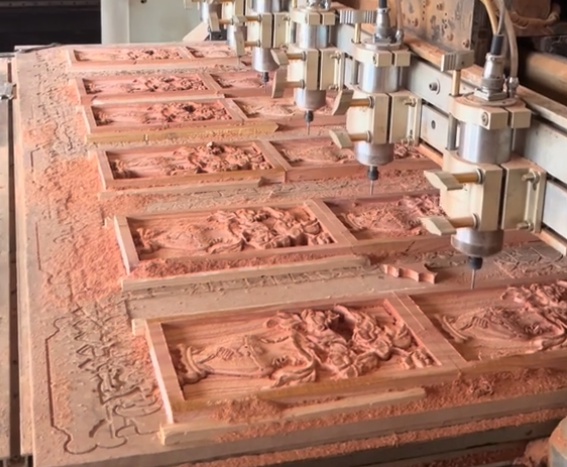
CNC engraving is a subtractive manufacturing process that uses computer numerical control (CNC) to engrave text, logos, symbols, textures, or functional markings into a solid workpiece. Compared with hand engraving, CNC engraving offers higher repeatability, better dimensional control, and the ability to automate complex patterns on a wide range of materials.
Fundamentals of CNC Engraving
CNC engraving combines digital design, toolpath programming, and precision motion control to remove a small amount of material from the surface of a workpiece. The goal is usually visual communication (identification, branding, scales) or functional features (micro-channels, textured surfaces, shallow pockets).
Basic Process Flow
- Create or import a 2D or 2.5D design (text, logo, pattern) in CAD software.
- Generate CNC toolpaths in CAM software, selecting tools, feeds, and engraving depths.
- Clamp or fixture the workpiece on a CNC engraving machine, router, or machining center.
- Zero the machine axes and set tool length offsets.
- Run the NC program to execute the engraving operation.
- Inspect the result and perform deburring or surface finishing if required.
Characteristics of CNC Engraving
Typical distinguishing characteristics include:
- Shallow material removal, usually from a few tenths of a millimeter to a few millimeters.
- Use of small-diameter tools for fine detail: from about 0.1 mm to 6 mm for many applications.
- High spindle speeds to maintain proper cutting conditions with small tools.
- 2D or 2.5D toolpaths that follow outlines, hatch fills, or V-carve strategies.
Common Applications
CNC engraving is widely adopted in industrial, commercial, and consumer products, such as:
Identification and tracking: serial numbers, part numbers, date codes, QR codes, barcodes, and asset IDs on mechanical parts or nameplates.
Branding and aesthetics: company logos, decorative patterns, personalization on tools, consumer electronics, promotional items, trophies, and jewelry.
Functional markings: scales on dials, rulers, instrument panels, control panels, switch plates, and indicator marks on hardware.
It is also used to create molds with engraved textures, microfluidic channels, and fine features on precision components.
How CNC Engraving Works
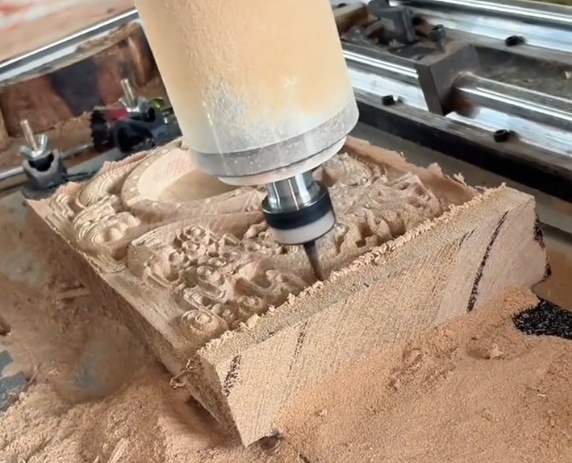
CNC engraving relies on precise coordination of spindle motion, cutting tools, and toolpaths defined in a program. The machine interprets the NC code and positions the tool relative to the part along X, Y, and Z axes with high accuracy.
Toolpath Types
The most common toolpath strategies in CNC engraving include:
Outline/contour engraving: The tool follows the boundary of characters or shapes. Depth is constant while the tool moves along a 2D profile.
V-carving: A V-shaped cutter engraves variable-width lines: shallow areas are narrow and deeper areas are wider, enhancing visual contrast.
Hatching and pocketing: For filled areas, parallel or cross-hatch toolpaths are used to engrave a region to a uniform depth.
3D relief engraving: When 2.5D or 3D surfaces are needed, the CAM software generates Z-level or 3D surfacing toolpaths to create relief patterns.
Programming and NC Code
Toolpaths are typically converted into G-code. A simplified sequence might include:
Tool selection (T code) and spindle speed (S code), tool change and spindle start (M codes), positioning moves (G00), linear interpolation moves (G01), and arcs (G02/G03). For engraving, the program defines exact coordinates and depths for each stroke or vector line.
Accuracy and Repeatability
Engraving accuracy depends on the mechanical quality of the machine, tool deflection, spindle runout, and backlash compensation. Typical industrial-grade CNC engraving machines can achieve positional accuracies in the range of ±0.01 mm to ±0.05 mm under controlled conditions. Repeatability often matches or exceeds this range when mechanical components are properly maintained.
Key Components of CNC Engraving Machines
CNC engraving can be performed on dedicated engraving machines, CNC routers, or milling centers. The key components largely determine the achievable precision, surface finish, and productivity.
Mechanical Structure
Common structural configurations include fixed-table gantry-type machines and moving-table designs. Rigid frames minimize vibration and deflection, which is important because even small deviations can compromise fine detail.
Guideways may be linear rails or hardened ways. Ball screws or linear motors drive the axes. High-quality ball screws with low backlash and accurate pitch enhance positional accuracy for small engravings.
Spindle System
Engraving often uses high-speed spindles to compensate for the small cutting diameter of engraving tools.
Spindle characteristics affecting engraving include:
Maximum speed: Light-duty spindles may offer 12,000–24,000 rpm, while dedicated engraving spindles can reach 60,000 rpm or higher.
Power: Generally lower than heavy milling spindles, often from a few hundred watts to a few kilowatts, because material removal rates are modest.
Runout: Lower spindle runout (for example < 0.005 mm at the tool) is critical to maintain consistent line width and surface finish.
Control System and Drives
A CNC controller interprets G-code, executes motion planning, and synchronizes axis movement. Servo motors or stepper motors drive the axes. Servo-driven systems usually provide better accuracy and closed-loop control, which is beneficial for fine engraving.
Tool Holding and Workholding
Precision collets (ER, spring collets) are commonly used to hold small engraving cutters. For the workpiece, appropriate fixtures, clamps, vises, or vacuum tables ensure stable support. For thin sheets or plates, vacuum tables or adhesive fixtures help maintain flatness.
Types of CNC Engraving Machines
Several machine types are used for CNC engraving, each suited to different materials, thicknesses, and precision requirements.
CNC Engraving Machines
Dedicated CNC engraving machines are optimized for small tools, high spindle speeds, and fine motion control. They typically offer:
High-speed spindles for small-diameter cutters.
Good dynamic response for rapid small movements.
Enhanced precision suitable for nameplates, molds, and micro-features.
CNC Routers
CNC routers are commonly used for engraving wood, plastics, composites, and soft metals such as aluminum. They often feature larger working envelopes suitable for panels, signs, and furniture components. Compared with dedicated engraving machines, some routers may have lower stiffness, but they provide larger format capability.
CNC Milling and Machining Centers
Standard CNC milling machines and machining centers can also perform engraving operations. They are particularly useful when both rough machining and engraving are required on the same part, such as machined molds with engraved text. While their spindle speeds may be lower than specialized engraving machines, modern high-speed machining centers bridge this gap for many applications.
Benchtop and Desktop Machines
Compact benchtop CNC engravers are suitable for small-scale production, prototyping, and educational use. They often feature smaller working ranges, lower power, and more modest accuracy compared with industrial systems, but they are adequate for many small parts and personalization tasks.
Materials for CNC Engraving
CNC engraving can be applied to metals, plastics, wood, composites, and other solids. Material properties such as hardness, toughness, and thermal conductivity affect tool selection, cutting parameters, and surface finish.
| Material | Typical Applications | Notes for Engraving |
|---|---|---|
| Aluminum (e.g., 6061, 7075) | Nameplates, control panels, housings, molds | Good machinability; avoid built-up edge with proper speed and lubrication. |
| Stainless steel (e.g., 304, 316) | Industrial plates, medical devices, food equipment | Higher hardness; requires rigid setups and suitable coatings for tools. |
| Carbon steel and tool steel | Dies, molds, mechanical parts | Can be pre‑hardened or hardened; appropriate tool materials and coolant needed. |
| Brass and copper | Electrical components, decorative parts | Good surface finish; precise control of feeds avoids burrs. |
| Plastics (e.g., ABS, acrylic, PVC, PC) | Signage, panels, enclosures | Sensitive to heat; use sharp tools and moderate chip loads. |
| Wood and MDF | Signs, furniture components, decorative panels | Fibrous; requires suitable cutters to minimize tear-out. |
| Laminates (e.g., phenolic, HPL) | Control panels, labels, badges | Brittle surfaces; careful depth control is essential. |
| Composites (e.g., FR4, carbon fiber) | Electronic panels, structural parts | Abrasive; tools wear faster; dust extraction is important. |
Metal Engraving
Metal is one of the most common categories for CNC engraving. Markings on metal surfaces are durable and resistant to abrasion and chemicals, which is important in industrial environments.
Important considerations for metal engraving include:
Tool material: solid carbide tools with suitable coatings (e.g., TiAlN) increase wear resistance.
Lubrication: depending on the metal, flood coolant, mist, or air blast helps chip evacuation and temperature control.
Depth: shallow engravings (for example 0.1–0.5 mm) are common for identification; deeper engravings require more passes and careful load management.
Plastic Engraving
For plastics, controlling heat and preventing melting or smearing is important. Typical practices include:
Using sharp, polished tools to reduce friction.
Reducing spindle speed or increasing feed to avoid excessive heat concentration.
Using air blast instead of liquid coolant when necessary to avoid chemical reactions or swelling.
Plastics such as acrylic can yield very clear, high-contrast engravings, especially when backlit or filled with paint.
Wood and Composite Engraving
Wood engraving often focuses on signage, decorative elements, and custom products. Grain direction can affect cutting behavior. Using appropriate cutters and optimizing depth per pass helps to minimize tear-out and maintain clean edges.
For composites and engineered boards, dust extraction is important to maintain a clean working environment and protect machine components.
Engraving Tools and Parameters
The selection of tools and cutting parameters directly determines engraving quality, edge sharpness, and productivity.
Common Tool Types
Typical CNC engraving tools include:
V-bit (V-shaped engraving cutter): creates variable-width lines and is widely used for text, sign-making, and decorative patterns.
Flat end mill (square end): used for pocketing, filled shapes, and simple line engravings with uniform width.
Ball nose end mill: used for 3D relief engraving and smooth curved surfaces.
Drag engraver (non-rotating, spring-loaded): used mainly on softer materials where the tool is dragged across the surface.
Engraving Depth and Line Width
Depth values vary with material, tool, and application, but many general-purpose engravings fall within:
0.1–0.3 mm for fine text and delicate logos.
0.3–1.0 mm for more visible markings or where subsequent painting or filling is planned.
Above 1.0 mm for durable markings in harsh environments or functional grooves.
For V-bits, line width depends on depth and included angle. For example, a 60° V-bit will produce narrower lines than a 90° V-bit at the same depth. CAM software usually calculates the toolpath to achieve the required visual width.
Feeds, Speeds, and Passes
Typical parameter considerations:
Spindle speed: higher for small tools and softer materials; lower for harder materials or large-diameter tools.
Feed rate: set to maintain proper chip load; too low can cause rubbing, too high can cause tool breakage.
Depth of cut per pass: shallow for delicate tools and hard materials; multiple passes may be required for deeper engravings.
Machine and tool manufacturers frequently provide recommended starting points that can be refined based on actual results.
Surface Finish and Post-Processing
Surface finish influences readability, aesthetics, and functionality of the engraving. Post-processing can enhance contrast or ensure compliance with specific requirements.
Deburring and Cleaning
Engraving may leave small burrs, especially on metals and some plastics. Deburring methods include manual scraping, brushing, blasting, or light sanding. Cleaning removes chips and residues before painting or filling.
Color Filling and Inlays
For readability and appearance, engraved features are often filled with paint, resin, or contrasting materials. Common steps:
Engrave the feature to a defined depth.
Clean and degrease the engraved area.
Apply paint or resin into the grooves.
Remove excess from the surface and allow curing.
In some applications, separate materials are inlaid into the engraved cavities, such as metals in wood or colored plastics in metals.
Surface Treatments
Engraved metal parts may be anodized, plated, or coated. The sequence of surface treatment and engraving affects final appearance. For example, performing engraving after anodizing exposes the base metal, resulting in a contrast between the colored surface and the raw engraved lines. Alternatively, engraving before coating may produce a more uniform surface but reduced contrast.
Accuracy, Tolerances, and Design Considerations
Designing graphics or text for CNC engraving requires understanding the limitations and capabilities of the process to ensure legibility and manufacturability.
Minimum Feature Sizes
The minimum line width and detail size are constrained by tool diameter and machine accuracy. For example:
Very small text may require tools with diameters of 0.2–0.5 mm.
Spacing between features should account for tool diameter to avoid overlapping toolpaths.
Sharp internal corners will be approximated by the tool radius, resulting in small fillets rather than exact corners.
Font and Geometry Selection
For text, simple sans-serif fonts often engrave more reliably than complex decorative fonts, especially at small sizes. Stroke thickness should be consistent with available tool diameters and desired depth. Closed shapes must be fully defined in the design to ensure continuous toolpaths.
Tolerances and Dimensional Requirements
Dimensional tolerances for engraving are typically looser than those for critical mechanical features, but they still need definition for quality control. Common practice might allow ±0.1 mm or more for letter width or position on many commercial products. For precision scales or measurement instruments, tighter tolerances may be necessary and must be matched to machine and tooling capabilities.
Cost Factors in CNC Engraving
Costs in CNC engraving depend on equipment, tooling, programming effort, and production volume. Understanding the main cost drivers helps in project estimation and decision-making.
Machine and Equipment Costs
CNC engraving machine costs vary widely according to size, precision, and configuration. For estimation purposes, categories can be described qualitatively:
Entry-level desktop engravers: lower initial cost, smaller working area, suitable for small items and low production volumes.
Industrial engraving machines and routers: higher acquisition cost, larger working envelopes, higher duty cycles, and better precision.
High-end machining centers with engraving capability: highest capital cost but can combine milling and engraving in one setup.
Tooling and Consumable Costs
Engraving tools are consumables that wear out or break, especially when used on hard or abrasive materials. Tool costs are influenced by:
Tool material and coating.
Tool geometry and size.
Frequency of tool changes and expected tool life.
Consumables also include coolant or lubricants, cleaning supplies, and protective films for delicate surfaces.
Programming and Setup Costs
Each new design typically requires programming (CAD/CAM work) and machine setup. Influencing factors include:
Complexity of artwork, number of fonts, and geometry.
Number of tool changes required.
Quality checks and test runs to verify depth and appearance.
For single-piece or low-volume jobs, programming and setup may represent a significant share of the unit cost. For larger batch sizes, these costs are spread over many parts.
Per-Part Production Costs
Once the program and setup are complete, per-part costs are determined by:
Machine time (engraving cycle time, loading and unloading time).
Labor time for operators and inspectors.
Post-processing operations such as deburring, cleaning, and color filling.
Optimizing toolpaths, depths, and feeds can reduce cycle time and extend tool life, lowering overall costs.
Comparing CNC Engraving with Other Marking Methods
CNC engraving is one of several marking approaches. Selecting the appropriate method depends on required durability, flexibility, and part characteristics.
| Method | Characteristics | Typical Use Cases |
|---|---|---|
| CNC engraving | Material removal, permanent, high precision, suitable for many materials. | Industrial plates, metal parts, molds, high-end signage. |
| Laser marking/engraving | Non-contact, fine detail, high speed, depends on optical contrast or surface changes. | Barcodes, electronics housings, plastic parts, coated metals. |
| Stamping and embossing | High-volume, uses dies, may deform material. | Coins, tags, metal nameplates. |
| Printing (inkjet, pad printing) | Non-permanent or semi-permanent, flexible color options. | Logos on consumer goods, packaging, labels. |
Durability and Depth
CNC engraving removes material to create recesses that are resistant to abrasion and many chemicals. This is valuable where markings must remain legible over the service life of a product, including exposure to cleaning, weather, or mechanical contact.
Flexibility and Integration
CNC engraving can be integrated directly into machining processes for parts already being milled or drilled. This reduces the need for separate marking operations and can simplify logistics. It is also flexible regarding geometry, enabling both simple text and complex designs without dedicated physical tooling.
Common Issues and Considerations in CNC Engraving
Effective CNC engraving requires careful attention to several practical aspects. Some common difficulties and considerations include:
Tool Breakage and Wear
Small engraving tools are more susceptible to breakage from excessive feed, depth, or poor workholding. Monitoring tool condition and choosing conservative parameters, especially for hard materials, reduces the risk of unexpected failures and poor engraving quality.
Burrs and Edge Quality
Burr formation is a frequent issue, particularly with ductile metals. Strategies to minimize burrs include:
Optimizing feeds and speeds to promote clean shearing.
Using sharp and appropriate tool geometries.
Applying suitable lubrication for the material.
Workholding and Flatness
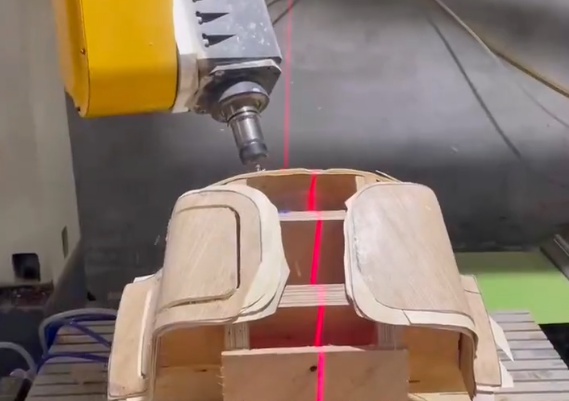
For thin plates or panels, poor clamping or surface irregularities can cause inconsistent engraving depth. Vacuum tables, sacrificial boards, and even clamping pressure distribution help maintain flatness. Probe-based surface mapping can be used in advanced systems to compensate for minor surface deviations.
Verification and Quality Control
Inspecting the engraving for correct content, position, and readability is important. For critical applications, this may involve measuring depth with gauges, checking dimensions with microscopes or optical systems, and verifying codes or symbols using scanners.
When to Use CNC Engraving
CNC engraving is well suited to situations where permanent, precise markings or shallow features are needed on solid materials, especially when the parts are already being processed on CNC equipment. It can be applied to individual components, small and medium batches, and compatible large-production workflows when integrated efficiently.
By selecting appropriate machines, tools, and parameters, and understanding material behavior and cost drivers, CNC engraving can deliver consistent, high-quality results for industrial identification, branding, and functional markings across a wide range of applications.