What Is Plywood
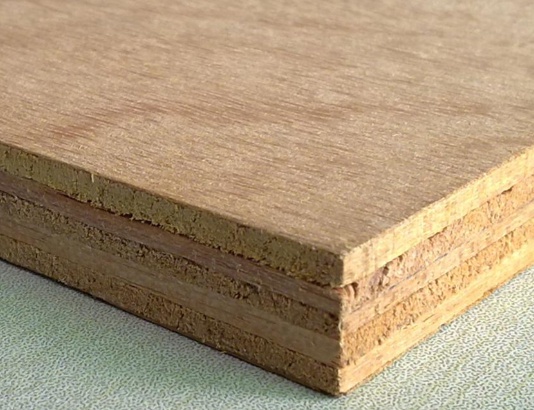
Plywood is an engineered wood panel made by bonding multiple thin layers of wood veneer so that the grain direction of adjacent layers is usually perpendicular. This cross-laminated structure improves dimensional stability, strength, and resistance to splitting compared with solid wood of similar thickness.
Plywood is widely used in structural construction, subfloors, roofing, wall sheathing, furniture, cabinets, packaging, vehicle bodies and many other applications where a flat, stable wood-based panel is required.
Plywood Structure and Components
Plywood panels are composed of wood veneers and adhesive. The arrangement, thickness, and quality of veneers and the type of adhesive determine performance and suitability for different environments.
Veneer Layers
Each individual sheet of wood is called a veneer ply. A plywood panel usually contains:
- Face veneer: Top visible layer, selected for appearance or durability.
- Back veneer: Bottom outer layer, may be lower visual grade than face.
- Core veneers: Inner layers, often lower visual grade but structurally important.
Common veneer thickness ranges from about 1.0 mm to 3.6 mm depending on species, panel thickness, and standard. The total panel thickness is the sum of all veneer thicknesses plus adhesive lines.
Grain Orientation
In most plywood, the grain of adjacent veneers is oriented at right angles (90 degrees). This configuration:
- Reduces anisotropy compared with solid wood.
- Improves stiffness and strength in the minor direction.
- Limits dimensional movement due to moisture changes.
Some specialized panels may use different layup angles such as 45 degrees for specific performance requirements, but standard construction plywood is generally cross-laminated at 90 degrees.
Number of Plies
Panels can be 3-ply, 5-ply, 7-ply, 9-ply or more. As thickness increases, the number of plies typically increases while individual veneers stay within reasonable thickness limits. Odd numbers of plies are common because they simplify symmetric construction around the central veneer, improving panel balance and reducing warping.
Adhesives
The adhesive system is critical for bond durability, water resistance, and emissions. Common adhesive chemistries include:
- Urea-formaldehyde (UF): Used primarily for interior and non-structural panels, good bonding strength, limited water resistance.
- Phenol-formaldehyde (PF): Dark-colored, high durability, suitable for exterior and structural applications, high water and heat resistance.
- Melamine-urea-formaldehyde (MUF): Improved moisture resistance over UF, used in some exterior and semi-exposed applications.
Adhesives are usually applied as liquid or resin solution onto veneers before hot pressing. Press parameters such as temperature, pressure, and time are controlled to achieve proper curing and bond strength.
Main Types of Plywood
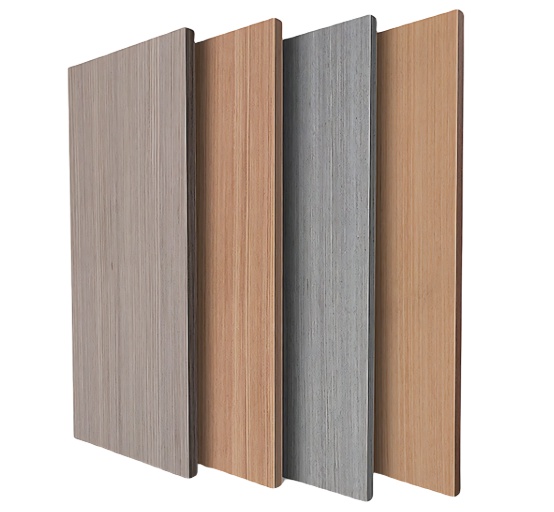
Plywood classification can be based on wood species, intended use, exposure conditions, or surface quality. Understanding these types helps in selecting appropriate panels.
Softwood Plywood
Softwood plywood uses species such as pine, spruce, fir, or similar conifers. It is widely used in construction and structural applications.
Typical uses include:
- Roof sheathing
- Wall and floor sheathing
- Concrete formwork
- Industrial packaging and crates
Softwood plywood usually prioritizes mechanical strength and stiffness over decorative appearance.
Hardwood Plywood
Hardwood plywood uses species such as birch, poplar, beech, oak, maple, and others. It is frequently used where better surface quality, screw-holding capacity, or specific mechanical properties are required.
Typical uses:
- Furniture carcasses and components
- Cabinetry and built-in joinery
- Interior paneling
- Substrates for decorative laminates
Hardwood plywood can be structural or non-structural depending on adhesive type, veneer quality, and panel construction.
Structural Plywood
Structural plywood is manufactured to meet specific load-bearing and durability requirements defined in standards. It is used where panels contribute to the load-bearing performance of the building or structure.
Characteristics include:
- Verified mechanical properties (bending strength, stiffness, shear strength).
- Durable adhesive bonds for specified exposure conditions.
- Tolerance control for thickness, length, width, and squareness.
Structural panels often carry certification marks indicating compliance with standards such as EN 636 (Europe), AS/NZS 2269 (Australasia), or PS 1/PS 2 (North America).
Non-Structural Plywood
Non-structural plywood is intended for applications where load-bearing requirements are minimal or not regulated. It focuses on surface appearance, machinability, or cost efficiency.
Typical uses include interior wall lining, cabinet backs, low-stress furniture components, and decorative paneling. Adhesive may be less moisture-resistant than structural grades, so these panels are normally limited to dry interior environments.
Exterior and Marine Plywood
Exterior plywood is designed for outdoor or humid conditions. Key features include moisture-resistant adhesive and suitable wood species for durability. Typical uses are external wall cladding, soffits, exterior doorskins (with proper sealing), and site hoardings.
Marine plywood is manufactured for environments with continuous or frequent water exposure. It has:
- High-quality, void-free core veneers.
- Durable exterior-type adhesive.
- Tight manufacturing tolerances to minimize defects.
Marine plywood is used in boat building, ship interiors, docks, and other situations where panel failure due to delamination or core defects would be critical.
Decorative and Overlay Plywood
Decorative plywood uses high-grade face veneers or overlays to provide an attractive appearance. Common surface options include:
- Natural wood veneers (e.g., oak, walnut, maple).
- Reconstituted veneers with consistent grain patterns.
- Film-faced or melamine surfaces for improved abrasion and stain resistance.
These panels are common in furniture fronts, interior doors, architectural millwork, and shopfitting.
Grades and Quality Classification
Plywood grades describe face and back veneer quality, and sometimes overall panel performance. Grading systems vary by country and standard but share common concepts.
Appearance Grades
Appearance grades specify permissible defects such as knots, splits, patches, and color variation. Sample systems:
- North American: Grades such as A, B, C, D for softwood faces, with A being smooth and nearly defect-free and D allowing open defects.
- European: Visual classes for hardwood and softwood panels with defined knot size limits, repairs, and veneer joins.
A panel often has different grades for face and back (for example, A/B, B/C). Choosing grade depends on visibility and finishing requirements.
Mechanical and Bond Quality Grades
Some systems classify plywood according to bond quality and intended service environment. Using EN 636 as an example:
- Class 1: For dry interior conditions, limited moisture exposure.
- Class 2: For humid conditions, occasional wetting.
- Class 3: For exterior conditions, frequent or prolonged wetting.
Bond quality levels are linked to adhesive type and testing results (e.g., shear strength retention after cyclic boil/dry tests). Structural grades may also be associated with characteristic strength and stiffness values used in design calculations.
Thickness, Size, and Tolerance
Standard thicknesses include approximately 3 mm, 4 mm, 6 mm, 9 mm, 12 mm, 15 mm, 18 mm, 21 mm, and 25 mm, with regional variations. Common panel sizes in many markets are 1220 x 2440 mm (4 ft x 8 ft), with other lengths and widths available.
Manufacturing tolerances apply to thickness, length, width, and squareness. Adherence to tolerances ensures fit and performance in construction and joinery applications.
How Plywood Is Manufactured
Plywood manufacturing is a controlled industrial process that transforms logs into finished panels through multiple stages. Process steps may vary among mills but generally follow similar sequences.
Log Preparation and Peeling
Logs are selected, debarked, and often conditioned by soaking or steaming to soften the wood and improve veneer quality. Conditioning parameters such as temperature and time are adjusted based on species and diameter.
Veneer is produced either by rotary peeling, in which the log is rotated against a knife to produce continuous sheets, or sliced cutting for special decorative veneers. Rotary peeling is predominant for standard plywood due to high productivity and efficient log utilization.
Veneer Drying and Sorting
Freshly peeled veneers contain high moisture content. They are dried using hot air or other systems to a target moisture content typically in the range of about 6–12 percent, depending on adhesive and product specification.
After drying, veneers are graded according to defects, thickness, and intended use as face or core layers. They may be clipped into specific widths and repaired with patches or plugs if required by grade rules.
Adhesive Application and Layup
Adhesive is applied to veneers using roller coaters, curtain coaters, or other equipment. Spread rate and uniformity are tightly controlled to achieve consistent bonding without excessive consumption.
Veneers are then assembled into layups: core layers with alternating grain directions, front and back faces aligned, and sometimes additional crossbands for improved stability. The layup defines the final panel thickness and performance characteristics.
Hot Pressing
Layups are loaded into a hot press with heated platens. Press conditions are selected according to adhesive type, veneer thickness, panel thickness, and production speed. Typical parameters include:
- Press temperature: often in the range of 120–150 °C for UF and MUF systems and higher for PF systems.
- Press pressure: sufficient to ensure intimate contact and squeeze-out control, commonly several N/mm².
- Press time: determined by adhesive cure kinetics and panel configuration.
During pressing, adhesive cures, veneers bond together, and the panel attains stable thickness.
Trimming, Sanding, and Finishing
After hot pressing, panels are cooled and then trimmed to final size, squaring the edges. Surface sanding is performed to obtain a uniform thickness and smooth surface suitable for finishing or overlaying.
Additional operations may include edge machining, tongue-and-groove profiling, application of surface overlays, or factory sealing of edges for specific uses such as formwork.
Quality Control and Testing
Manufacturers implement regular quality checks to comply with standards and certifications. Testing may include:
- Bond quality tests (shear strength, wood failure percentage).
- Bending strength and modulus of elasticity measurements.
- Dimensional tolerances and squareness checks.
- Moisture content determination.
Results are used to confirm that production batches meet specified properties and to adjust process parameters when necessary.
Key Physical and Mechanical Properties
Plywood properties depend on wood species, veneer quality, adhesive system, density, panel thickness, and construction details. Understanding these properties is essential for design and application.
Density and Weight
Panel density is broadly similar to the average density of the wood species used, adjusted for adhesive and void content. Typical density ranges:
- Softwood plywood: approximately 450–600 kg/m³.
- Hardwood plywood: approximately 550–750 kg/m³, depending on species.
Panel mass per unit area can be estimated by multiplying density by thickness. For example, a 12 mm panel at 600 kg/m³ has an approximate mass of 7.2 kg/m².
Bending Strength and Stiffness
The primary structural performance indicators are bending strength (modulus of rupture) and stiffness (modulus of elasticity) in both major (face grain) and minor (cross-grain) directions. Values are typically higher in the major direction because more veneers are oriented in that direction.
Design standards provide characteristic values for different plywood grades, thicknesses, and constructions. Designers use these values in structural calculations to verify load-bearing capacity for beams, floors, and sheathing panels.
Shear Strength and Rolling Shear
Plywood carries in-plane shear forces through its cross-laminated veneers and adhesive bonds. Panel shear strength depends on wood strength parallel and perpendicular to grain and on bond quality.
Rolling shear in cross-layers is a specific mode related to shear stresses perpendicular to grain; designers must account for this when evaluating panels in applications such as timber floors or diaphragms subject to horizontal loads.
Dimensional Stability and Moisture Behavior
Plywood exhibits lower dimensional movement than solid wood of equivalent dimensions because cross-grain veneers restrain each other. However, moisture variations still cause limited expansion, contraction, and potential warping.
Key parameters include:
- Linear expansion/contraction in major and minor directions.
- Thickness swelling due to moisture uptake.
- Long-term creep under sustained load and varying humidity.
Appropriate detailing, ventilation, and edge sealing help maintain dimensional stability in service.
Fire Performance
Plywood is combustible because it is wood-based. Fire performance depends on thickness, density, surface treatments, and additional fire-retardant measures. Some building regulations specify minimum panel thicknesses or require fire-retardant-treated plywood in certain applications.
Fire behavior is usually defined by standard tests measuring surface spread of flame, smoke production, and structural integrity under fire exposure. Fire-retardant chemicals may be incorporated by impregnation or coatings to improve classification.
Common Plywood Sizes and Specifications
Standardized sizes and thicknesses simplify design, logistics, and installation. Dimensions can vary by region, but certain formats are widely recognized.
| Nominal Thickness (mm) | Approximate Thickness (inch) | Typical Applications |
|---|---|---|
| 3–4 | 1/8 | Lightweight lining, drawer bottoms, curved forms, lamination layers |
| 6 | 1/4 | Cabinet backs, paneling, light partitions |
| 9 | 3/8 | Shelving with short spans, non-structural flooring over solid base |
| 12 | 1/2 | Furniture carcasses, subfloors, roof sheathing with closer supports |
| 15 | 5/8 | Structural floors, heavier shelving, wall sheathing |
| 18 | 3/4 | Heavy-duty floors, high-load furniture, stair components |
| 21–25 | 7/8–1 | High-load platforms, industrial applications, thick substrates |
Common panel size formats include:
- 1220 x 2440 mm (4 ft x 8 ft) for many building and furniture uses.
- 1250 x 2500 mm for European and other markets.
- Larger formats such as 1200 x 2700 mm or 1200 x 3000 mm for specific systems.
Some panels are manufactured with profiled edges such as tongue-and-groove for flooring applications. Structural plywood may also bear markings indicating thickness, grade, standard reference, and span ratings.
Plywood vs Other Panel Products
Plywood competes with other panel materials such as oriented strand board (OSB), particleboard, and medium-density fiberboard (MDF). Each offers distinct characteristics.
| Panel Type | Main Composition | Key Strengths | Typical Limitations | Common Uses |
|---|---|---|---|---|
| Plywood | Cross-laminated wood veneers | Good strength and stiffness, good fastener holding, improved dimensional stability. | Cost can be higher, exposed edges require sealing, surface variability. | Structural sheathing, floors, roofs, furniture, cabinets. |
| OSB | Oriented wood strands and resin | Cost-effective, good structural performance, large uniform panels. | Edge swelling in moisture, surface roughness for finishing. | Wall, roof, and floor sheathing, subfloors. |
| MDF | Wood fibers and resin | Very smooth surface, good machinability, uniform density. | Lower moisture resistance, lower screw-holding than plywood. | Furniture, cabinet doors, moldings, painted panels. |
| Particleboard | Wood particles and resin | Low cost, flat surface, good for laminates. | Limited structural capacity, sensitive to moisture. | Furniture cores, countertops with laminate, shelving with edge support. |
Selection among these products depends on required structural performance, exposure conditions, finishing techniques, and cost constraints.
Typical Applications of Plywood
Plywood is used in many sectors due to its combination of strength, stiffness, and relatively low weight. This section outlines major application categories and their technical considerations.
Construction and Structural Use
In building construction, plywood serves as a load-distributing and bracing element. Common applications include:
- Floor and roof sheathing over joists or rafters.
- Wall sheathing to transfer wind and seismic loads.
- Webs and flanges in composite beams and box structures.
- Permanent formwork in some systems.
Designers must consider span rating, allowable loads, fastener spacing, and diaphragm action. Structural plywood panels are used in both light-frame timber buildings and timber-concrete composite systems.
Concrete Formwork
Plywood formwork provides smooth surfaces for cast concrete. Requirements include adequate bending strength, surface durability, dimensional stability, and resistance to alkaline solutions in concrete.
Film-faced plywood with phenolic resin overlays is commonly used because the overlay improves surface finish, reduces sticking, and extends re-use life. Edges are often sealed to limit water ingress and edge swelling.
Furniture and Cabinetry
Plywood is a core material for furniture carcasses, shelves, seats, backs, and internal supports. It offers good screw-holding and load capacity compared with some other panel types.
In cabinetry, plywood is used for sides, bottoms, and structural partitions. The face veneer may be selected for appearance, or panels may be laminated with decorative high-pressure laminates, foils, or veneers.
Interior Finishes and Millwork
Interior wall and ceiling paneling, door skins, built-in furniture, and joinery frequently use plywood. Technical considerations include surface smoothness, visual grade, compatibility with finishes (varnish, paint, oil), and fire performance requirements.
Curved elements can be produced by bending thin plywood or by laminating multiple thin layers over a mold to create stable curved forms.
Transport, Packaging, and Industrial Uses
Plywood is widely used in crates, pallets, boxes, and industrial containers due to its strength-to-weight ratio and resistance to impact. Vehicle and trailer floors, truck side panels, and container linings also benefit from plywood’s stiffness and durability.
In such environments, resistance to vibration, repeated loading, abrasion, and moisture is important. Anti-slip overlays or coatings can be applied to flooring panels where slip resistance is required.
Marine and Exterior Applications
Marine plywood is selected for hulls, decks, bulkheads, and interiors in boat building. It must resist delamination and maintain structural integrity despite frequent wetting and drying cycles.
For exterior cladding or soffits, plywood must comply with durability requirements, be properly coated, and have details that shed water, provide ventilation, and protect panel edges.
Selection Criteria for Plywood
Selecting appropriate plywood involves aligning panel properties with service conditions, structural requirements, and finishing methods. Key criteria include:
Load-Bearing Requirements
For structural uses, verification of plywood strength and stiffness is essential. Considerations include:
- Span between supports and anticipated loads.
- Required diaphragm or shear wall performance.
- Vibration and deflection limits for floors and roofs.
Structural design standards provide guidance on panel thickness, grade, and fastener layout for specific applications.
Service Environment and Moisture Exposure
Exposure conditions determine bond class and wood durability requirements:
- Dry interior: Panels with interior bond quality and lower moisture resistance may be sufficient.
- Humid interior or occasional wetting: Panels with improved moisture-resistant adhesives are recommended.
- Exterior or marine: Panels with fully exterior bond quality and durable species are required.
Incorrect matching of adhesive type and environment may lead to delamination, swelling, and strength loss over time.
Surface Appearance and Finishing
Visible surfaces require suitable veneer grade or overlay type. Consider:
- Uniformity of grain and color for clear finishing.
- Acceptable level of patches, plugs, and joint lines.
- Compatibility with paints, stains, clear coatings, or laminates.
Sanding quality and veneer thickness also influence how well panels accept finishing and how much sanding can be performed on site without exposing core veneers.
Fastening and Machining
Plywood generally provides good fastener holding capacity. When selecting panels, take into account:
- Required screw withdrawal resistance for joints.
- Suitability for nailing, stapling, or doweling.
- Machining characteristics for cutting, routing, drilling, and edge profiling.
Using sharp tools and correct feed speeds minimizes tear-out and ensures clean edges, especially for hardwood-faced plywood.
Regulatory and Standard Requirements
Building codes or project specifications may require plywood to comply with specific standards and certifications. Examples include:
- Structural load ratings and service class identification.
- Reaction-to-fire or fire resistance classifications.
- Emission limits for formaldehyde or other volatile components.
Panels should be supplied with markings or documentation demonstrating conformity with relevant regulations.
Installation and Handling Considerations
Performance of plywood in service depends not only on manufacturing quality but also on correct handling, storage, and installation practices.
Storage and Conditioning
Plywood should be stored in dry, covered conditions on flat supports. Key practices include:
- Stacking panels on level bearers with adequate spacing.
- Protecting stacks from direct rain or standing water.
- Allowing panels to acclimatize to site humidity before installation.
Conditioning reduces the risk of dimensional movement after installation and helps maintain flatness.
Cutting and Edge Treatment
Cutting should be performed with appropriate saw blades designed for panel products. To minimize splintering at the face veneer, users can employ scoring cuts, fine-tooth blades, or support the panel close to the cut line.
Edges are more susceptible to moisture than surfaces. Edge sealing with suitable paint, sealant, or edge banding is recommended in humid or exterior environments and in concrete formwork applications.
Fastening and Joint Design
Fastener type, spacing, and placement affect load transfer and panel performance. Typical fastening considerations:
- Ensuring nails or screws are set back appropriately from edges to avoid splitting.
- Using corrosion-resistant fasteners in exterior or humid environments.
- Following recommended spacing for sheathing and diaphragm applications.
Panel joints should allow for small expansion gaps to accommodate dimensional changes due to moisture. Tightly butted joints may lead to buckling under high humidity.
Finishing and Protection
Surface coatings protect plywood from moisture and ultraviolet radiation and enhance appearance. Coating systems may include primers, sealers, and topcoats compatible with the adhesive and veneer type.
In exterior applications, maintenance of coatings over the service life is necessary to maintain protection. Failure to maintain coatings can allow moisture ingress, leading to swelling and degradation at edges and surfaces.
Common Issues and Practical Considerations
In real-world applications, certain issues appear frequently. Understanding them helps in planning and prevention.
Warping and Panel Distortion
Warping can occur due to asymmetric moisture exposure, non-symmetric veneer layup, or uneven storage support. Preventive measures include using balanced construction panels, storing panels on level supports, and avoiding partial wetting during use.
Delamination and Bond Failure
Delamination is the separation of veneers due to inadequate adhesive bonding or exposure to moisture beyond the adhesive’s capacity. Using appropriate bond classes, complying with manufacturer recommendations, and avoiding prolonged water exposure beyond design assumptions reduce this risk.
Edge Swelling and Surface Checking
Unprotected edges can swell visibly in humid or wet conditions. Surface checking (fine cracks) may develop due to cyclic moisture and temperature changes. Edge sealing, appropriate coatings, and good detailing such as drips and ventilation gaps help mitigate these problems.
Fastener-Related Problems
Incorrect fastener type, excessive or insufficient length, and improper spacing can lead to splitting, reduced capacity, or squeaking floors. Adhering to design and manufacturer guidelines for fastener selection and installation is essential for reliable performance.
Health, Safety and Environmental Considerations
Plywood manufacturing and use involve health, safety, and environmental aspects that users should understand.
Formaldehyde Emissions
Adhesives used in plywood may emit formaldehyde. Emission levels are regulated in many regions, with classification schemes (for example, E1, E0, or similar) indicating compliance with specific limits.
Specifying low-emission panels and ensuring adequate ventilation during installation and early use can reduce indoor air quality concerns. Certification labels and technical data sheets provide information on emission classes.
Handling and Worker Safety
Plywood sheets can be heavy and cumbersome. Proper manual handling techniques or mechanical lifting aids should be used to reduce risk of musculoskeletal injuries. Cutting and sanding generate dust and noise; suitable dust extraction, eye protection, hearing protection, and respiratory protection may be required according to local regulations.
Resource Use and Recycling
Plywood manufacturing typically uses logs from forest resources. Certification schemes for sustainable forestry can demonstrate responsible sourcing. Offcuts and end-of-life panels may be reused in secondary applications, mechanically recycled, or used as fuel, depending on local infrastructure and regulations.
Summary
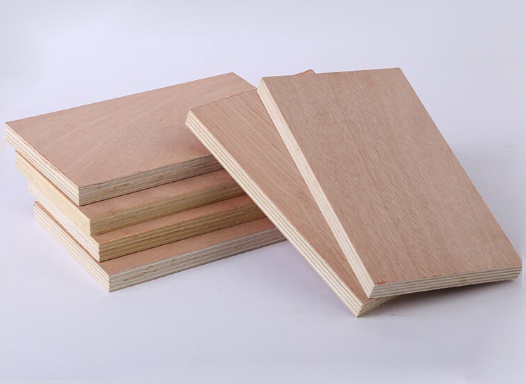
Plywood is a versatile, engineered wood panel composed of cross-laminated veneers bonded with adhesives. Its mechanical performance, dimensional stability, and broad range of thicknesses and grades make it suitable for applications in structural construction, furniture, interiors, packaging, transport, and marine use.
Technical selection requires consideration of veneer species and quality, adhesive type, grade, thickness, exposure conditions, structural demands, and regulatory requirements. Proper storage, handling, installation, and finishing ensure that plywood panels deliver reliable performance over their service life.