Overview of Wooden Crafts
Wooden crafts cover a wide range of objects made from wood, from small decorative pieces to complex furniture. They can be functional, decorative, or a combination of both. Wooden crafts are shaped by design goals, type of wood, construction method, and surface finishing. Understanding these elements helps makers plan projects that are safe, durable, and visually consistent.
At a technical level, wooden crafts rely on accurate measurement, stable joinery, appropriate wood species, and controlled moisture content. Tools range from simple knives and chisels to lathes and power saws. Project complexity can be scaled to suit beginners, hobbyists, or professional woodworkers.
Major Types of Wooden Crafts
Wooden crafts can be grouped by how material is shaped and joined. Each type requires specific tools, techniques, and planning methods. The following categories cover most common wooden craft activities.
Wood Carving
Wood carving is the controlled removal of wood with cutting tools to create shapes, patterns, or figures. It is suitable for both small ornaments and large architectural details.
Common forms of wood carving include:
- Relief carving: Patterns carved into a flat board, where figures project from the background.
- In-the-round carving: Fully three-dimensional figures or objects.
- Chip carving: Geometric patterns produced by removing small chips in standardized cuts.
Typical tools: carving knives, gouges, V-tools, mallets, and sharpening stones. Soft, fine-grained woods such as basswood and linden are often selected for detailed work because of predictable cutting behavior and reduced tool wear.
Whittling
Whittling is knife-based shaping of small wooden objects, usually worked by hand without bench-mounted tools. It is suited to compact items such as small animals, spoons, figurines, and camping utensils.
Key characteristics of whittling include:
Use of a limited tool set, typically a dedicated whittling knife with a short blade and secure handle; reliance on controlled strokes and grain awareness; and portable, low-setup work, often done away from a full workshop. Safety depends on sharp blades, stable grip, and cuts directed away from the body.
Woodturning
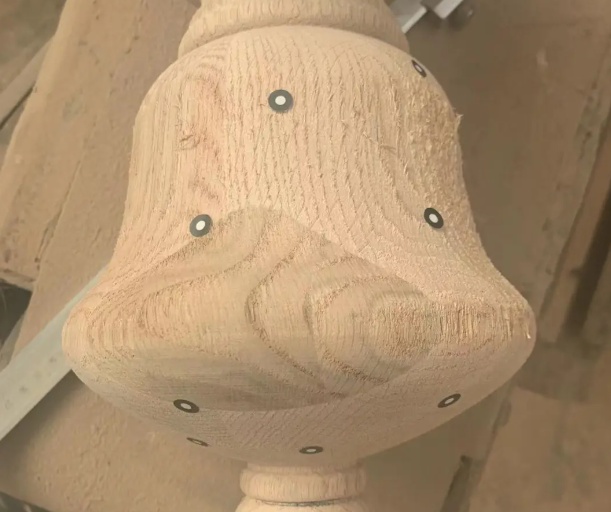
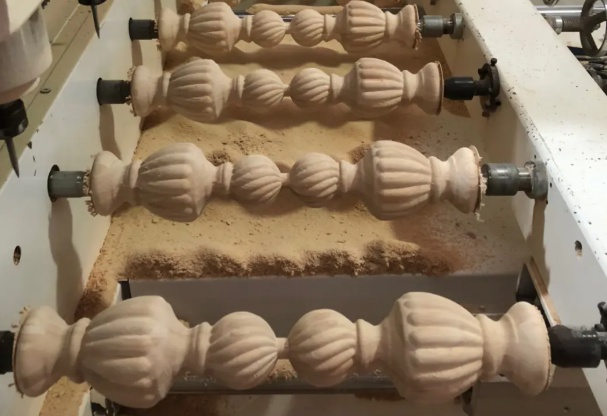
Woodturning shapes wood while it rotates on a lathe. The craftsperson holds cutting tools against the spinning workpiece to form symmetrical shapes. Woodturning is efficient for bowls, vases, spindles, handles, pens, and similar cylindrical or round objects.
Core elements include a lathe with adjustable speed, centers or chucks to hold the work, and turning tools such as spindle gouges, bowl gouges, skew chisels, and parting tools. Balanced mounting and appropriate speed selection are critical for safety and surface quality. Dry, stable wood minimizes warping after turning, especially for precise components such as table legs or railing spindles.
Joinery and Furniture Making
Joinery-based wooden crafts focus on constructing items from multiple parts. This category includes tables, chairs, cabinets, boxes, frames, and structural elements. The main goal is durable connections between parts while managing wood movement over time.
Typical hand and machine tools include saws, chisels, planers, routers, drills, and clamps. Common joints include mortise and tenon, dovetail, box joint, lap joint, dowel joint, and biscuit joint. Selection depends on load, appearance, and production speed. Accurate layout and dry fitting are necessary to verify fit before gluing.
Wooden Toys and Educational Items
Wooden toys, puzzles, and learning aids combine design, safety, and durability. Examples are building blocks, pull-along toys, sorting shapes, stackers, and simple mechanical toys with gears or cams.
Requirements typically include rounded edges, non-toxic finishes, secure fasteners, and resistance to impact. Softwoods are often used for lightweight parts, while hardwoods may be chosen for wear surfaces. Projects must consider choking-hazard dimensions and reliable attachment of small components.
Functional Kitchen and Tableware
Kitchen-focused wooden crafts include spoons, cutting boards, serving trays, rolling pins, salad bowls, utensils, and knife racks. These items must withstand repeated washing, food contact, and mechanical stress from use.
End-grain cutting boards are commonly used for improved resistance to knife marks, while edge-grain boards are simpler to build. Dense, closed-grain hardwoods such as maple and beech are preferred for food-contact surfaces. Finishes are usually limited to food-safe oils and waxes that do not generate harmful residues.
Decorative and Home Accent Crafts
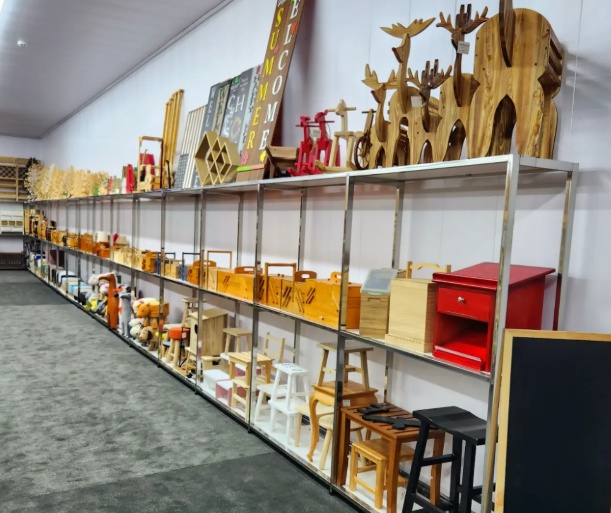
This group covers picture frames, wall panels, candle holders, shelves, mirror frames, decorative boxes, clocks, and trim pieces. These items emphasize appearance and consistency with interior design styles.
Design decisions address proportion, color, texture, and alignment with the room’s overall style. Construction may use simple butt joints for lightweight wall decor or more advanced joinery for load-bearing shelves. Finishes can be clear, stained, painted, or textured.
Outdoor Wooden Crafts
Outdoor crafts include planters, birdhouses, garden furniture, pergolas, signs, and fences. Projects must resist sun, moisture, and dimensional changes due to temperature and humidity.
Outdoor-appropriate species, such as cedar, redwood, or treated lumber, combined with exterior-grade fasteners and finishes, improve service life. Allowances for drainage and ventilation reduce standing water and decay risk.
Common Styles in Wooden Crafts
Style defines the visual language of a wooden craft. It influences form, ornamentation, joinery visibility, and finishing. Many projects combine more than one style, but understanding main categories helps align design with user expectations and existing decor.
Traditional and Classic Styles
Traditional styles draw from historical furniture and architectural forms. They often feature balanced proportions and recognizable profiles. Examples include Shaker, Colonial, and farmhouse influences.
Key characteristics include framed panel construction, visible but refined joinery, gentle curves, and moderate ornamentation. Materials typically include hardwoods with warm, transparent finishes that highlight grain. Technical focus is on accurate joinery and repeatable parts for consistency across matching pieces.
Rustic and Natural Styles
Rustic crafts incorporate visible knots, irregular edges, and natural textures. Live-edge slabs, branches, and reclaimed boards are frequently used. Surface treatment may preserve tool marks or natural cracks, sometimes stabilized with bow-tie keys or clear epoxy fills.
Joinery can be visibly simple, such as dowels or lag screws, or more advanced but still exposed. Finish systems often use oil or low-sheen coatings that preserve a natural appearance. Dimensional variation and grain irregularities are accepted as part of the design.
Modern, Minimalist, and Contemporary Styles
Modern and minimalist crafts emphasize clean lines, simple forms, and subdued decoration. Surfaces remain flat or gently curved, and components align in clear geometric relationships.
Construction techniques prioritize tight joints with minimal visual emphasis. Hardware may be concealed. Engineered panels such as plywood, MDF with veneer, or laminated boards are common for large surfaces. Color palettes often use neutral tones or monochrome schemes, sometimes with contrasting accents.
Carved and Ornamental Styles
In ornamental styles, surface decoration is a primary design element. Carved motifs, inlays, and turned details are combined with base structures such as boxes, frames, doors, or architectural trim.
Techniques include relief carving, chip carving, pierced carving, marquetry, and inlay using contrasting wood species or other materials. Successful implementation requires precise layout, tool control, and consistent depth across repeated patterns.
Ethnic and Cultural Styles
Many regions maintain distinctive woodcraft traditions, such as Scandinavian, Japanese, African, South Asian, or Central European styles. These may include specific motifs, construction systems, and finishing practices.
For example, Japanese joinery frequently uses interlocking joints with minimal metal fasteners, while Scandinavian styles often emphasize light-colored woods and functional simplicity. When drawing from cultural styles, accurate reference to dimensions, patterns, and typical wood species helps maintain visual coherence.
Essential Tools and Equipment for Wooden Crafts
Tool selection depends on project type, available space, and budget. A systematic tool approach improves accuracy and safety. The following table summarizes major tool categories and typical uses.
| Tool Category | Common Tools | Primary Uses | Typical Considerations |
|---|---|---|---|
| Measuring & Layout | Tape measure, steel rule, square, marking gauge, marking knife, bevel gauge | Accurate dimensioning, angle layout, joint marking | Use metric or imperial consistently; verify squareness regularly |
| Cutting & Shaping (Hand) | Hand saws, chisels, planes, rasps, files, carving knives | Dimensioning boards, fitting joints, shaping profiles | Requires sharpening system and regular edge maintenance |
| Cutting & Shaping (Power) | Table saw, miter saw, band saw, jigsaw, router, drill press | Efficient cutting, repeatable parts, joinery, holes | Needs dust collection, stable stands, and proper guards |
| Turning | Lathe, turning gouges, scrapers, faceplates, chucks | Bowls, spindles, knobs, handles, pens | Balanced mounting, speed selection, and tool rest setup are critical |
| Abrasion & Surface Prep | Random-orbit sander, sanding blocks, abrasives (various grits) | Surface smoothing, finish preparation | Progressive grit sequence; dust control and respiratory protection |
| Clamping & Assembly | Bar clamps, F-clamps, pipe clamps, corner clamps | Joint assembly, glue-ups, alignment | Plan clamp layout before glue application to avoid delays |
| Finishing | Brushes, rags, spray guns, oil applicators | Applying oils, varnishes, lacquers, stains | Ventilation, compatibility of finish layers, curing time |
Key Wood Species and Their Properties
Matching wood species to project requirements improves stability, workability, and longevity. Factors include density, hardness, grain pattern, dimensional stability, and cost. The following table summarizes common species used in wooden crafts.
| Wood Species | Type | Typical Janka Hardness (lbf) | Common Uses | Notes |
|---|---|---|---|---|
| Basswood | Hardwood | ~410 | Carving, whittling, small decorative items | Very easy to carve; fine, even grain; low wear resistance |
| Maple (Hard) | Hardwood | ~1450 | Cutting boards, furniture, flooring, turned items | Dense, durable, light color; can burn with dull tools |
| Oak (Red/White) | Hardwood | ~1290–1360 | Furniture, cabinetry, frames, structural parts | Prominent grain; open pores; accepts stain well |
| Walnut | Hardwood | ~1010 | High-end furniture, decorative boxes, gunstocks | Rich dark color; stable; relatively easy to work |
| Cherry | Hardwood | ~950 | Furniture, cabinets, turned bowls, trim | Darkens with light exposure; smooth finish; medium hardness |
| Pine | Softwood | ~380–870 (species-dependent) | General construction, rustic furniture, craft items | Lightweight; knots common; resins can affect finishing |
| Cedar (Western Red) | Softwood | ~350 | Outdoor projects, chests, paneling, birdhouses | Natural decay resistance; fragrant; relatively soft |
| Beech | Hardwood | ~1300 | Tool handles, furniture, cutting boards | Fine, even texture; good for turned objects and wear parts |
Fundamental Techniques in Wooden Crafts
Systematic techniques allow makers to produce accurate, repeatable results. Most projects share common steps: measuring and layout, cutting and shaping, joinery, surface preparation, and finishing. Each step influences the next, so planning is essential.
Measurement, Layout, and Marking
Reliable layout is the basis of precise work. Use a single reference edge and face on each board and mark them clearly. Measure from these references instead of from rough or cut edges. For joints, mark mating parts together to minimize transferred errors.
Marking knives and gauges create thin, precise lines that guide saws and chisels. For angled components, a sliding bevel gauge records angles directly from a prototype or plan, reducing calculation steps. Tolerance decisions depend on project type, but tight-fitting joints usually require layout accuracy within fractions of a millimeter or a few thousandths of an inch.
Cutting, Shaping, and Dimensioning
Dimensioning begins with rough cuts that leave extra material for final trimming. Machine tools handle bulk reduction, while hand tools refine critical surfaces.
Straight cuts require stable work support and secure clamping or fences. Crosscuts (across the grain) and rip cuts (along the grain) produce different chip patterns, so blade selection and feed rate should match the direction of cut. For curved shapes, band saws or jigsaws are used, followed by rasps, spokeshaves, or sanding to reach final contours.
Joinery Methods
Joinery provides both structural strength and alignment. Selection depends on load, appearance, and available tools. Some joints are primarily mechanical; others rely on adhesive bonding.
Mortise and tenon joints carry substantial load and are common in chairs, tables, and frames. Dovetail joints resist pulling apart and are used in drawers and boxes. Box joints provide similar glue surface area but are easier to cut with jigs. Dowels, biscuits, and loose tenons assist alignment where appearance demands concealed joints. Regardless of method, dry fitting before gluing verifies fit and reveals alignment problems.
Sanding and Surface Preparation
Surface preparation affects finish adhesion and appearance. Start with an appropriate grit for tool marks and progress through finer grits. Skipping intermediate grits may leave visible scratches. Sanding with the grain usually produces a more uniform surface than sanding across it.
Edges may be eased with a small chamfer or round-over to reduce splintering and finish wear. After sanding, remove dust from pores, especially on open-grained woods. Compressed air, vacuuming, or tack cloths can be used. Some species benefit from grain-raising and resanding before final finishing, especially for water-based finishes.
Finishing Systems and Parameters
Finishes protect wood from moisture, abrasion, and contaminants while modifying appearance. Parameters include film thickness, solvent type, cure time, and maintenance requirements. Broad finish categories include oils, oil/varnish blends, film-forming varnishes, lacquers, shellac, and paints.
Oil finishes (such as linseed or tung-based products) penetrate the wood and usually produce low to medium sheen. They are straightforward to apply but provide limited surface film. Varnishes and polyurethanes form thicker films and offer higher abrasion resistance. Lacquer and shellac cure quickly and enable multiple thin coats in short intervals. For food-contact surfaces, use dedicated food-safe oils or products approved for that application.
Planning Wooden Craft Projects
Project success depends on planning that aligns design, material selection, joinery, and finishing. Planning reduces material waste, tool changes, and rework.
Defining Function and Constraints
Every project should start with functional requirements and constraints. These include load capacity, environmental exposure, storage space, user ergonomics, maintenance availability, and budget. For example, a cutting board must withstand repeated knife impact and moisture, while a wall decoration carries only its own weight.
Dimensions should be compatible with human usage: seat height, reach distance, hand grip size, and clearances for opening drawers or doors. If items must pass through doorways or fit in vehicles, maximum module size must be considered in the design.
Material and Hardware Selection
Material choice influences workability, weight, strength, and appearance. Combining solid wood and engineered panels can balance cost with stability. Hardware selection covers hinges, drawer slides, screws, bolts, and specialized connectors. Use corrosion-resistant fasteners in high-humidity or outdoor environments.
When planning, obtain boards with extra length and width for cutting defects, grain matching, and test cuts. For visible surfaces, choose boards with compatible grain direction and color, especially on adjacent panels.
Creating Drawings and Cut Lists
Scaled drawings, either hand-drawn or digital, clarify proportions and joint placement. Exploded views show component relationships and fastener locations. From these drawings, create a cut list covering part name, quantity, finished dimensions, and grain direction.
The cut list should also reflect material thickness and allowances for planing or sanding. When using sheet goods, optimize cutting layouts to minimize waste and to keep critical edges aligned with factory edges where possible.
Sequencing Operations
Operation order affects accuracy and efficiency. Typical sequences begin with milling lumber to flat and square, followed by cutting to rough dimensions, then joinery, dry fitting, glue-up, final trimming, sanding, and finishing. Intermediate steps like drilling or routing may need to be completed before assembly if access will be restricted afterwards.
Glue-up procedures should be rehearsed. Arrange clamps, cauls, glue, and cleanup materials before starting, especially for assemblies with multiple joints that must be closed within adhesive open time. Monitoring squareness and alignment during clamping reduces the need for later correction.
Safety and Practical Considerations
Safe practice is essential for any wooden craft, regardless of scale. Most incidents result from distraction, improper setup, or defeated safety devices. A stable work environment and consistent procedures reduce risk.
Personal Protective Equipment
Basic protection includes eye protection, hearing protection for power tools, and respiratory protection during cutting and sanding. Gloves must be chosen carefully; they are not recommended near rotating machinery but can be useful for handling rough lumber or during finishing. Non-slip footwear supports stable posture and reduces fatigue.
Dust and Noise Control
Wood dust may cause respiratory irritation or sensitization. Dust extraction systems connected to major machines, combined with local vacuums and regular cleanup, maintain air quality. Some species produce more irritating dust and may require enhanced filtration. Noise from saws, planers, and routers often exceeds safe levels; hearing protection should be standard during machine operation.
Tool Maintenance and Setup
Sharp tools reduce kickback risk and improve cut quality. Maintain a sharpening routine for blades, bits, and chisels. Check alignment of fences, miter gauges, and tables periodically. Before each session, verify that guards and riving knives are in place and that power cords and switches operate correctly.
When switching operations, reset fence positions and test cuts on scrap material. This confirms dimensions and helps detect misalignment before cutting project pieces.
Common Issues and Practical Limitations
Wooden crafts present several recurring issues related to material behavior and workshop conditions. Recognizing these early can reduce failures and rework.
Wood Movement and Dimensional Change
Wood expands and contracts mainly across the grain as humidity changes. Projects that ignore this can develop cracks, warping, or joint failure. To accommodate movement, allow panels to float within frames, orient boards with alternating growth ring direction in glued panels, and avoid rigidly fixing wide boards across their width.
Measuring moisture content with a meter helps determine whether lumber has equilibrated to the workshop environment. Indoor furniture typically performs best when built from wood conditioned close to the expected service humidity.
Surface Defects and Tear-Out
Grain direction, knots, and interlocked fibers can cause tear-out during planing, routing, or turning. Preventive measures include lighter cuts, sharp tools, adjusted feed direction, and sometimes backing boards or sacrificial edges. For difficult grain, cabinet scrapers or high-angle planes can produce smoother surfaces with reduced tear-out.
Glue Joint Failures
Joint failures often result from insufficient glue coverage, excessive clamp pressure that starves the joint, or contamination on bonding surfaces. Ensure clean, freshly cut surfaces; apply enough adhesive to cover the joint evenly; and maintain clamp pressure according to adhesive guidelines. Temperature and humidity during curing affect final strength, so glue-ups should be done within the recommended range.
Wooden Craft Ideas and Inspiration
Wooden craft projects can be matched to available time, tools, and experience. Organizing ideas by complexity and function helps select achievable goals while building skills.
Beginner-Friendly Projects
For new practitioners, compact projects with limited joinery and minimal tools are suitable. Example projects include:
- Simple cutting boards made from a single species or basic laminations.
- Wall-mounted key racks with hooks and a decorative top profile.
- Basic shelves with bracket supports or straightforward wall cleats.
These projects reinforce core skills such as measuring, straight cutting, sanding, and applying clear finishes. They also fit into small spaces and do not require complex fixtures.
Intermediate Furniture and Storage Items
As skills progress, multi-part assemblies and improved joinery can be introduced. Examples include small coffee tables, benches, nightstands, and storage boxes with hinged lids. These projects include load-bearing structures, drawer or door alignment, and more demanding surface preparation.
Planning becomes more critical at this stage, as inaccuracies can accumulate across multiple parts. Makers may incorporate mortise and tenon joints, dowel alignment, or pocket screw systems, depending on available equipment and desired aesthetics.
Advanced Carving and Turned Pieces
Advanced projects involve complex curves, detailed carving, or multi-axis turning. Examples include sculptural bowls, carved panels, elaborate chair components, and segmented turned vessels. These require strong understanding of grain behavior, tool angles, and controlled cutting pressure.
Success depends on stable workholding, precise templates or layouts, and consistent sharpening. Finishes may involve multi-step processes with sanding to very fine grits, pore filling for open-grained woods, and multiple topcoat layers.
Decor and Architectural Elements
Larger decorative items include wall panels, headboards, stair components, and interior trim. These projects impact the overall visual character of a room and may involve repeated modules, such as identical balusters or panel frames.
Measurements must accommodate building tolerances such as out-of-square walls or uneven floors. Installation often requires scribing pieces to fit irregular surfaces, using templates and controlled trimming.
Care, Maintenance, and Longevity
Long-term performance of wooden crafts depends on maintenance suited to the finish and environment. Proper care maintains both appearance and structural integrity.
Routine Cleaning and Handling
Most indoor items only need dry dusting or wiping with a slightly damp cloth. Avoid harsh chemicals on finished surfaces; they may dull or soften finishes. Use coasters, pads, and felt feet to prevent dents, scratches, and water rings on furniture.
Re-Oiling and Refinishing
Oil-finished surfaces and cutting boards periodically require additional oil to maintain moisture resistance. Frequency depends on use and cleaning methods. Applying a thin coat, allowing it to penetrate, and wiping off excess before full cure is standard procedure.
Film-forming finishes can sometimes be renewed by light sanding and adding new coats. For severely worn or damaged surfaces, complete stripping and refinishing may be needed. When refinishing, ensure compatibility between existing and new coatings or remove the old finish entirely.
Storage and Environmental Control
Store wooden items away from direct heating sources and prolonged direct sunlight when possible. Extreme localized heating can cause cracking or warping. In regions with strong seasonal humidity shifts, moderate control of indoor humidity reduces dimensional cycling and stress on joints.
Conclusion
Wooden crafts span a broad technical field that integrates material science, tool handling, geometry, and finishing. By understanding major craft types, stylistic options, tool systems, wood properties, and the full sequence from planning to maintenance, makers can design and build projects that are both functional and durable. Systematic methods and attention to safety allow even small workshops or home settings to produce consistent, high-quality wooden items with reliable performance over time.