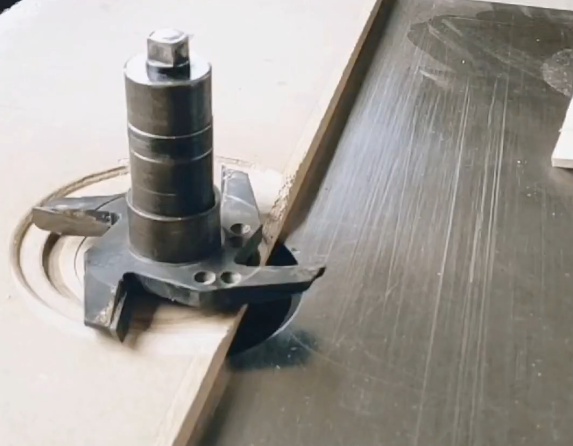
Wood milling tools transform raw timber and panel products into precise components by cutting, shaping, profiling, and sizing. Understanding tool types, geometry, materials, and application-specific parameters is essential for efficient, accurate, and safe wood machining in both manual and CNC operations.
Fundamentals of Wood Milling in Woodworking
Wood milling covers all rotary cutting operations that remove material with a rotating tool. It applies to solid wood, engineered panels (MDF, plywood, particleboard), and composites.
Key aspects of wood milling include:
- Tool rotation and feed direction
- Cutter material and coating
- Cutting edge geometry and chip evacuation
- Workpiece support and clamping
In woodworking, milling operations are typically performed on routers, CNC machining centers, shapers, moulders, spindle moulders, planers, jointers, and specialized production machines.
Core Categories of Wood Milling Tools
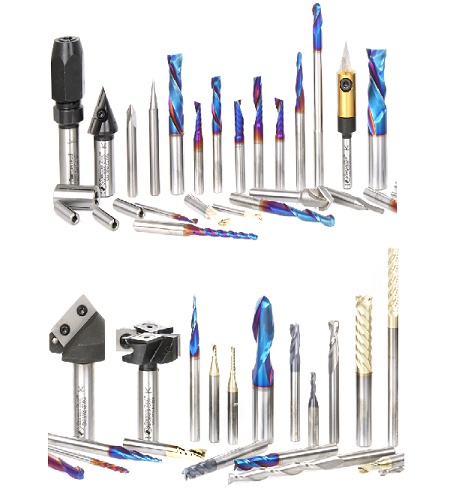
Wood milling tools can be grouped by machine type and cutting geometry. Each category is optimized for specific operations, tolerances, and production volumes.
Router Bits
Router bits are among the most versatile wood cutters, used on handheld routers, table routers, and CNC routers. They are available with various shank diameters and cutting profiles.
Main router bit subtypes:
- Straight and spiral bits for slotting, grooving, and edge trimming
- Profiling bits for decorative and joinery shapes
- Flush-trim and pattern bits with bearings for template work
Shaper and Spindle Moulder Cutters
Shaper cutters are larger-diameter tools used on spindle moulders and shapers. They provide higher stock removal rates, deeper profiles, and are common in door, window, and furniture production.
Features typically include:
- Cutterheads with replaceable knives or profile inserts
- Large diameters for smooth cuts and high feed rates
- Custom profiles for specific mouldings and joinery
Planer, Jointer, and Thicknesser Knives
Planer and jointer cutters are designed to flatten, straighten, and dimension solid wood. Cutterheads hold multiple knives or inserts arranged around the circumference.
Common types are:
- Traditional straight knife cutterheads
- Spiral and helical insert cutterheads
- High-speed steel and carbide inserts for different materials
CNC Wood Milling Tools
CNC wood milling tools largely overlap with router tooling but are optimized for automated, high-precision operations. Toolholders, collets, and balanced cutters are critical to accuracy and surface quality.
CNC tooling covers:
- End mills (straight and spiral) for contouring and pocketing
- Compression and chipbreaker tools for panel processing
- Specialty tools for hinges, joints, and hardware recesses
Tool Materials for Wood Milling Cutters
Tool performance depends heavily on substrate material and edge technology. Wood, especially abrasive engineered boards, demands wear-resistant yet tough cutting edges.
High Speed Steel (HSS)
HSS cutters are widely used for light to medium-duty wood machining. They are relatively tough and easy to sharpen, making them suitable for solid wood with moderate abrasiveness.
Characteristics:
- Good toughness and impact resistance
- Lower wear resistance compared to carbide
- Economical for small shops and general-purpose routing
Carbide Tipped and Solid Carbide
Carbide tipped and solid carbide tools dominate in professional wood machining, especially for abrasive materials and high-volume production.
Key advantages:
- High wear resistance for MDF, particleboard, and laminates
- Ability to maintain sharpness at higher cutting speeds
- Compatibility with insert systems for quick tool changes
Insert Technology
Insert-based cutterheads use replaceable carbide knives or profiled inserts secured mechanically. This approach limits downtime and maintains consistent tool diameter and geometry.
Insert systems are widely used in:
- Planer and jointer heads
- Shaper and spindle moulder heads
- CNC profile and rebate cutters
Cutter Geometry and Cutting Mechanics in Wood
Wood milling performance is determined by the interaction of rake angle, clearance angle, cutting edge radius, and helix. Wood’s anisotropic structure requires geometry that reduces tear-out and accommodates grain direction.
Rake and Clearance Angles
Rake angle influences chip flow and cutting forces:
- Positive rake facilitates easier cutting and smoother finishes, especially in softwood
- Moderate positive rake is commonly used for hardwoods and composites
Clearance angle prevents friction between the tool body and the workpiece, reducing heat and surface burnishing.
Helix and Shear Action
Helical and spiral geometries introduce a shearing action, which is highly beneficial for wood:
- Reduces tear-out on cross grain and end grain
- Improves surface quality on veneers and laminates
- Distributes cutting forces along a longer edge segment
Edge Radius and Surface Quality
A small edge radius produces clean cuts but is more prone to chipping in abrasive materials. Slightly honed or micro-rounded edges enhance durability while maintaining acceptable finish, especially in panel processing.
Common Types of Router Bits for Wood
Router bits are available in a wide range of profiles and sizes. Selection depends on the required operation, edge detail, and material type.
Straight Bits
Straight bits feature axial cutting edges that remove material in a linear path. They are used for grooves, dados, rebates, and simple slotting.
Typical applications include:
- Grooves for panels, drawer bottoms, and back panels
- Dado joints and housing joints
- Mortises in solid wood components
Spiral Bits
Spiral bits adopt an end-mill-like geometry and are available as upcut, downcut, and compression types.
Characteristics and uses:
- Upcut spiral: strong chip evacuation, good for deep slots and pocketing, may cause top surface tear-out
- Downcut spiral: clean top surface, reduced chip ejection, suitable for shallow grooves and trimming
- Compression spiral: upcut at the tip and downcut near the shank for clean top and bottom surfaces in plywood and laminates
Flush-Trim and Pattern Bits
Flush-trim bits use a bearing that follows a template or existing edge, trimming workpieces to an exact pattern. Pattern bits may have bearings at the top, bottom, or both ends for different setup configurations.
Profiling Bits
Profiling bits create decorative or functional edges. Common profiles include:
- Round-over and bevel bits for edge softening and chamfers
- Ogee and classical bits for decorative mouldings
- Cove bits for concave profiles
Joinery Bits
Specialized joinery bits cut precise interlocking geometries, such as:
- Finger joint and box joint bits
- Dovetail bits for sliding and through dovetails
- Lock miter bits for 90-degree corner joints
Shaper Cutters and Spindle Moulder Tooling
Shaper and spindle moulder tooling is designed for higher power machines and continuous production environments. Cutterheads may be fixed-profile or adjustable, with replaceable knives.
Fixed-Profile Shaper Cutters
Fixed-profile cutters are manufactured to a specific shape, commonly used for standard mouldings and frame components. They are suitable for repeated production of identical profiles.
Insert Cutterheads
Insert cutterheads hold straight or profiled knives in pockets. This approach allows:
- Rapid knife changes without grinding
- Consistent cutting diameter
- Fine-tuning of profile by changing insert sets
Raised Panel and Cope-and-Stick Cutters
Raised panel cutters machine the central panel of doors, while cope-and-stick sets produce interlocking frame components. They are engineered for balanced cutting and stable feed at relatively high depths of cut.
Planer, Jointer, and Thicknesser Cutterheads
Planer and jointer cutterheads shape and flatten surfaces by removing material across the entire width of the board.
Straight Knife Cutterheads
Traditional cutterheads use long straight knives. They are simple and cost-effective, but require precise knife setting and regular sharpening.
Helical and Spiral Insert Heads
Helical or spiral cutterheads use small square or rectangular carbide inserts arranged in a helical pattern. Advantages include:
- Reduced tear-out, especially in figured or interlocked grain
- Quieter operation
- Localized insert rotation or replacement after damage
CNC Wood Milling Tools and End Mills
CNC wood milling employs end mills, drills, and specialty cutters secured in collets or toolholders. Tool selection must match the machining strategy, material, and desired finish.
Flat and Ball Nose End Mills
Flat end mills are used for pocketing, profiling, and edge cutting. Ball nose end mills and tapered ball nose tools are applied to 3D carving and contouring, where smooth surface transitions are necessary.
Compression and Chipbreaker Tools
Compression end mills are widely used in panel processing to achieve clean edges on both faces. Chipbreaker geometries introduce small notches or steps along the cutting edge to break chips and reduce cutting forces, beneficial for heavy roughing.
Toolholding and Balancing
Accurate toolholding is critical in CNC wood machining. ER collets, shrink-fit holders, and precision chucks reduce runout and vibration. Balanced tool assemblies enhance surface quality and prolong spindle life.
Specialty Wood Milling Tools
Specialized tools address particular operations that standard cutters cannot perform efficiently or accurately.
Grooving, Slotting, and Biscuit Cutters
Dedicated grooving and biscuit cutters are optimized for narrow, precise slots. They are used for spline joints, biscuit joints, and hardware grooves.
Window, Door, and Stair Tooling Sets
Complete tooling sets integrate multiple cutterheads and inserts for systemized production of windows, doors, and stair components, ensuring compatibility and repeatable fit.
Flush-Facing and Surfacing Cutters
Large-diameter surfacing cutters flatten tabletops, slabs, and panels. They may feature multiple insert pockets arranged to produce a wide, even cutting path.
Comparing Major Wood Milling Tool Types
The following table summarizes typical characteristics, operations, and machine compatibility for major tool categories.
| Tool Type | Typical Material | Primary Operations | Compatible Machines | Typical Diameter Range |
|---|---|---|---|---|
| Router Bits | HSS, carbide tipped, solid carbide | Grooving, profiling, trimming, joinery | Hand router, router table, CNC router | 3 mm to 50 mm |
| Shaper Cutters | Carbide tipped, insert carbide | Moulding, panel raising, frame profiling | Spindle moulder, shaper | 80 mm to 250 mm |
| Planer/Jointer Heads | HSS knives, carbide inserts | Surfacing, dimensioning | Planer, jointer, thicknesser | 60 mm to 400 mm |
| CNC End Mills | Solid carbide | Contour cutting, pocketing, drilling | CNC router, machining center | 1 mm to 25 mm |
| Surfacing Cutters | Insert carbide | Face milling, slab flattening | Router, CNC, planer/moulder | 40 mm to 300 mm |
Key Parameters: Feed Rate, Speed, and Chip Load
Correct cutting parameters are essential for clean surfaces and long tool life. The main variables are spindle speed, feed rate, and chip load.
Spindle Speed (RPM)
Spindle speed is derived from cutting speed and tool diameter. Wood allows relatively high cutting speeds compared to metals, but excessive speed may cause burning or rapid wear.
Feed Rate and Chip Load
Chip load is the thickness of material removed by each cutting edge per revolution. It is a central parameter in wood machining.
| Tool Diameter | Material | Typical Chip Load per Tooth | Notes |
|---|---|---|---|
| 3–6 mm | Softwood, plywood | 0.05–0.15 mm | Light passes, higher RPM |
| 6–12 mm | Hardwood, MDF | 0.08–0.20 mm | General CNC routing range |
| 12–25 mm | Engineered boards | 0.12–0.30 mm | Roughing and general cutting |
| 80–150 mm | Shaper, spindle moulder | 0.20–0.60 mm | Feed depends on profile depth |
| 100–300 mm | Planer and surfacing | 0.10–0.50 mm | Linked to desired surface quality |
Workpiece Considerations in Wood Milling
Wood-specific factors strongly influence tool choice and parameters.
Grain Direction and Tear-Out
Working with the grain usually produces smoother surfaces. Cross-grain and end-grain operations benefit from shear-cutting geometries, sharp cutters, and reduced depth of cut.
Material Type: Solid Wood vs Panel Products
Solid wood varies in density, grain structure, and moisture content. Engineered panels often contain resins and fillers that increase abrasiveness. Carbide tooling is usually required for MDF, particleboard, and laminate-faced panels.
Workpiece Support and Clamping
Secure clamping minimizes vibration, reduces chatter, and improves dimensional accuracy. In CNC routing, vacuum pods and spoilboards are common; on shapers and routers, fences, featherboards, and jigs support narrow or curved parts.
Tool Selection Strategy for Wood Milling
Choosing the correct tool involves matching cutter geometry, material, and diameter to the machine, operation, and wood type.
Matching Cutter to Operation
For straight cuts, grooves, and pockets, end mills or straight bits with suitable chip evacuation are adequate. For visible edges and profiles, specialized profiling bits or shaper heads provide predictable, repeatable shapes.
Balancing Surface Quality and Productivity
Smaller diameters, higher speeds, and lower chip loads favor fine finishes, especially on detailed work. Larger tools, higher chip loads, and multiple cutting edges are suited to roughing and dimensioning.
Machine and Spindle Limitations
Machine power, maximum spindle speed, and toolholding capacity impose practical limits on tool size and cutting parameters. Tools must be operated within their rated maximum RPM and balanced for safe operation.
Common Issues and Practical Considerations
Certain complications frequently arise in wood milling and can often be addressed through tool and parameter adjustments.
Tear-Out and Fuzzy Grain
Tear-out on cross grain or at profile exits is often linked to inappropriate cutting direction, dull tools, or insufficient shear angle. Spiral and shear-cutting tools greatly reduce this issue.
Burning and Discoloration
Burn marks typically result from excessive spindle speed, low feed rate, dull edges, or inadequate chip evacuation. Increasing feed, reducing speed, or switching to a tool with better chip clearance often solves the problem.
Tool Wear and Edge Failure
Working with abrasive boards, knots, or contaminated stock accelerates wear. Carbide inserts, correct chip load, and regular inspection limit unexpected edge failure and dimensional drift.
Maintenance, Sharpening, and Tool Handling
Consistent performance and safety depend on proper maintenance and handling of wood milling tools.
Cleaning and Resin Removal
Resin and pitch buildup on cutting edges increases friction and heat. Regular cleaning with appropriate solvents or specialized cleaners preserves cutting performance and reduces burning.
Sharpening Practices
HSS and carbide-tipped tools can be resharpened a limited number of times, provided that geometry and balance are maintained. Insert systems allow simple rotation or replacement of individual knives without grinding.
Storage and Handling
Cutters should be stored in a way that protects edges from impact and corrosion. Individual holders, racks, or original packaging prevent chipping and maintain identification of specific profiles and diameters.
Safety Considerations in Wood Milling
Wood milling tools operate at high rotational speeds, and safe practices are essential.
Guarding and Personal Protection
Machine guards, fences, and hold-downs must be used as intended. Eye and hearing protection, appropriate clothing, and dust extraction contribute to a safe environment.
Tool Inspection and Balancing
Damaged, cracked, or unbalanced tools must not be used. Regular inspection and adherence to manufacturer recommendations for maximum RPM and mounting procedures are critical.
Feed Direction and Kickback Control
Most operations require feeding the work against the direction of tool rotation. Climb-cutting in wood is reserved for controlled, light passes under specific conditions to reduce tear-out and must be approached cautiously.
Conclusion
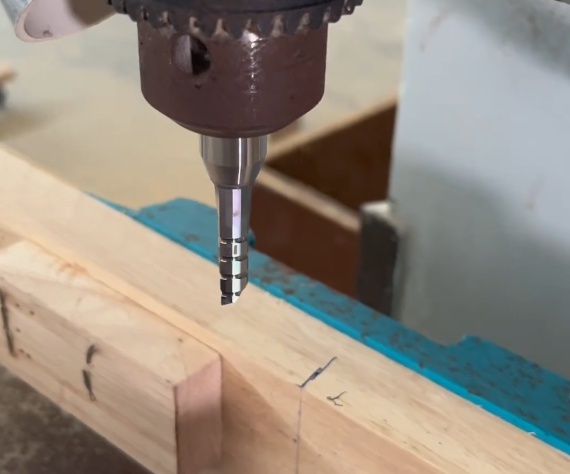
Wood milling tools encompass a broad range of cutters tailored to solid wood and panel machining, from router bits and shaper heads to helical planer cutterheads and CNC end mills. Understanding tool materials, geometry, and operating parameters allows users to select and apply cutters effectively, achieving accurate dimensions, clean surfaces, and reliable production across diverse woodworking tasks.